
7 Ways to Avoid Long RV Repair Wait Times

Last Updated: October 25, 2026
Quick Summary
You can avoid long RV repair wait times by booking weeks ahead in the off-season, asking shops about lead time and capacity before you commit, and getting milestone dates and an update interval in writing. Clear symptom notes, photos, and videos speed diagnosis, while mobile service or a second opinion can bypass the queue entirely.
RV repair wait times stretch into weeks because of service backlog, parts availability, and manufacturer approval.
Owners on the Heartland Owners forum report parts taking two to three weeks to arrive, and that is anecdotal, not measured.
Late fall and winter are slower months, so book preventive maintenance in the off-season to skip the spring rush.
Ask for the part number and expected arrival date, then check whether an aftermarket or used option ships faster.
Agree on a named contact, update interval, written estimate, and milestone dates before the repair starts.
Table of Contents
Why RV Repair Wait Times Stretch Into Weeks
How Long Do RV Repairs Take, Really?
Book Ahead: Scheduling That Beats the Peak Season Backlog
Off-Season Windows and Appointment Availability
Questions to Ask an RV Repair Shop Before You Book
The Booking and Triage Sequence
What Good Answers Sound Like
RV Repair Parts Delays and How to Get Ahead of Them
Describe the Problem Clearly to Speed Up Diagnosis
Photos, Videos, and Symptom Notes That Help Technicians
When a Mobile RV Repair Service Cuts the Wait
Escalation Steps When a Repair Stalls
Set the Communication Plan Before the Repair Starts
The Escalation Sequence
Keep the Record Useful
Frequently Asked Questions
Why RV Repair Wait Times Stretch Into Weeks
RV repair wait times often stretch into weeks because service centers are booked out, parts take time to arrive, and warranty approvals add steps before work begins. At Basin RV, we see the same pattern across the Permian Basin: the repair itself is often quick, but the queue around it is not.
Three things cause most of the delay:
Service backlog. Shops book weeks out during peak season, so your rig sits before anyone touches it.
Parts availability. Owners on the Heartland Owners forum report parts taking two to three weeks to arrive, and that is anecdotal, not measured.
Manufacturer approval. Warranty work needs sign-off before a technician starts, which adds days.
The fix is preparation, not luck. Below, we break down what actually drives the wait and how to shorten your own.
How Long Do RV Repairs Take, Really?
There is no single answer, because "RV repair" covers everything from a loose fitting to a cracked roof. A simple fix may finish the same day. A job that needs a part order or warranty approval can run weeks.
What most guides miss is that diagnosis is usually the fastest step. The delays pile up after it. So the practical question is not "how long does a repair take" but "how long does each stage around the repair take." Track those stages and you can plan around them.
Book Ahead: Scheduling That Beats the Peak Season Backlog
Appointment availability tightens when everyone else books at once. The single best move against RV repair wait times is to schedule before you need the work. Call weeks ahead for anything non-urgent, and ask the service center how far out they are booked before you commit.
Roaming With Rosie
Off-Season Windows and Appointment Availability
Late fall and winter are slower months at most shops, and the RV maintenance planning guidance recommends scheduling repairs during those quieter windows. Book preventive maintenance in the off-season and you skip the spring rush entirely. A shop with open bays can start your job the same week.
Questions to Ask an RV Repair Shop Before You Book
A booking call is your only chance to find out whether a shop will keep your RV moving or park it in a back lot for a month. Treat the call as a triage interview, not a reservation. The goal is to confirm three things before you commit: that the shop has capacity for your type of job, that you understand how diagnosis and approval will work, and that you have a named person and a written timeline.
The Booking and Triage Sequence
Work through these steps in order on the phone or in person. Each answer changes what you ask next.
Describe the symptom, not the diagnosis. Say what the RV is doing, when it happens, and what you have already ruled out. A service writer who asks follow-up questions is engaged; one who quotes a date without asking anything is guessing.
Confirm capacity for your job type. A shop that is wide open for oil changes may still be weeks out for roof or slide work. Ask specifically how far out they are booked for the repair category your rig needs.
Ask whether they accept drop-offs and when diagnosis begins. Some shops will take the RV but not look at it for days. Get the date diagnosis starts, not just the drop-off date.
Confirm how estimates and approvals work. Ask for a written estimate before work starts, whether the diagnostic fee is credited toward the repair, and who approves additional work if the technician finds a second problem.
Ask where the RV will be stored. Indoor bay, fenced lot, or open yard matters for security, weather, and whether you can access the rig while it waits.
Set the update cadence now. Agree on how often you will hear from them and who will call. "We'll call you" is not a plan; "you'll get a call every Tuesday and Thursday from the service writer" is.
What Good Answers Sound Like
A shop that is organized will answer these questions without hesitation and will put the key points in writing. A shop that hedges on lead time, cannot name who approves warranty work, or will not commit to an update interval is telling you how the repair will go. Get the answers in writing, even if it is just a confirmation email after the call.
Pro Tip Ask for the service writer's direct line and the service manager's name before you hang up. You will need both if the job stalls.
If you are vetting a shop for bigger structural work, it helps to know what a professional RV structural repair shop experience should include before you commit. The same booking questions apply, but the answers matter more when the repair is complex.
RV Repair Parts Delays and How to Get Ahead of Them
Parts availability is the delay owners complain about most, and it is the hardest to control. A common mistake is waiting for the shop to order a part without asking which one, or whether a substitute exists.
Owners with older rigs face the worst of it, since discontinued components can take weeks to source. If that is your situation, our guide to finding parts for older RVs covers sourcing strategies that skip the long wait.
Describe the Problem Clearly to Speed Up Diagnosis
Diagnosis moves fast when the technician knows what to look for. Write down the symptom, when it happens, and what you were doing when it started.

Photos, Videos, and Symptom Notes That Help Technicians
A short video of the fault in action can save a full diagnostic session. Capture the noise, the error code, or the leak while it is happening. Bring these to drop-off:
Photos of the failed part from two angles
A 30-second video showing the symptom
The make, model, and year of the RV and the appliance
When a Mobile RV Repair Service Cuts the Wait
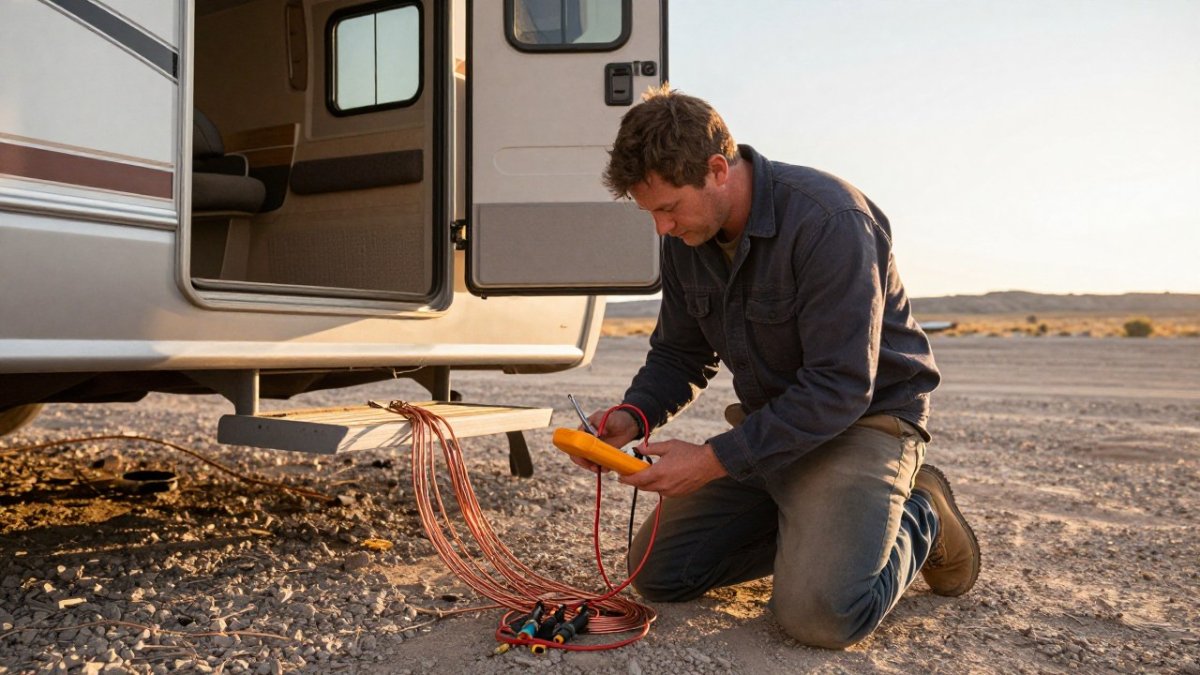
A mobile RV repair service brings the technician to your site, which removes the drop-off queue entirely. For on-site fixes like appliances, electrical faults, and HVAC issues, no towing is required. That matters most for full-time RVers and oil field workers who cannot afford to be without their rig for weeks.
Watch out: mobile service suits diagnostics and on-site repairs, but major structural work still needs a shop with the right equipment. For a practical walkthrough of booking this in the area, see our guide to mobile RV repair in the Permian Basin. If your breakdown is urgent, our 24/7 emergency mobile repair guide explains how to reach help fast.
Escalation Steps When a Repair Stalls
Escalation is not about getting angry; it is about creating a record that makes inaction visible. The owners who get repairs moving are the ones who can point to a promised date, a named contact, and a written status update that was missed. Build that record from day one, and escalation becomes a series of calm, documented steps rather than a confrontation.
Set the Communication Plan Before the Repair Starts
A measurable plan prevents most stalls. When you drop off the RV, agree on four things in writing:
A named point of contact at the shop, plus a backup name for days off.
An update interval (for example, every Tuesday and Friday by 4 p.m.) and the channel (call, text, or email).
A written estimate with line items, not a lump sum, and a clear statement of what triggers a revised estimate.
Key Takeaway A shop that will not commit to an update interval and milestone dates is a shop that will leave you calling for status. That is your signal to keep looking.
The Escalation Sequence
When a milestone slips, follow this order. Keep every message short and factual, and keep a single file with dates, names, and promises.
Request a written status update that names the current stage, the blocking issue, and the next milestone date. Ask for it in email so the answer is on record.
Identify the blocker. A parts backorder, a warranty approval, and shop capacity each require a different push. Ask which one applies and what the shop needs from you to clear it.
Confirm warranty coverage in writing. Know what your workmanship warranty covers before you escalate, so you can push back with facts rather than assumptions. Understanding what an RV workmanship warranty covers tells you whether a failed repair is the shop's responsibility or yours.
Move up the chain deliberately. Ask the service writer for the service manager, then the manager for the owner or general manager. Give each level one business day to respond before moving up.
Contact the warranty administrator if approval is the blocker. If the manufacturer or warranty provider is holding the job, ask the shop for the claim number and the adjuster's contact, then follow up directly and in writing.
Request a revised timeline in writing. If the original date is gone, ask for a new milestone schedule with dates. A revised schedule you can hold them to is better than an apology.
Arrange a second opinion if the timeline keeps slipping. A second shop can confirm the diagnosis and the parts list, and sometimes source a part faster. Ask the first shop to release the RV and provide the written diagnosis so the second shop is not starting from zero.
Keep the Record Useful
Log every call and email with the date, the person you spoke to, and what was promised. If the repair later becomes a warranty dispute, that log is the difference between a he-said-she-said conversation and a documented timeline. The same record helps you decide when to escalate and when to move the RV to another shop.
Problem | First Move | Expected Impact |
Booked-out shop | Ask lead time before booking | Avoids surprise weeks |
Part on backorder | Request part number and ETA | Enables faster sourcing |
Warranty hold-up | Submit full documentation early and get the claim number | Cuts approval delays |
Vague symptom | Send photos and video | Speeds diagnosis |
Repair past due | Request written status update with next milestone date | Creates accountability |
Timeline slipping repeatedly | Request revised schedule, then second opinion | Forces a decision point |
Frequently Asked Questions
What should I do if an RV repair shop is taking too long?
Ask for a written status update with a specific next milestone, not just a vague timeline. Confirm whether the holdup is diagnosis, a parts order, or manufacturer approval, since each has a different fix. If the delay is a parts order, ask for the part number and expected arrival date. Document every conversation with dates and names. If progress stalls past the promised milestone, escalate to the service manager in writing and ask for a revised completion date.
Can a mobile RV repair service help reduce wait times?
Often, yes. A mobile RV repair service brings the technician to your rig, which skips the drop-off queue and the tow that a shop visit can require. On-site work suits appliance, electrical, and HVAC diagnostics well. Major structural repairs still need a shop, but mobile service can confirm the diagnosis first so the shop visit is shorter and better planned.
How far in advance should I schedule RV service?
Book routine maintenance well before peak travel season, and call as soon as you notice a symptom rather than waiting for it to fail. If you are full-time in the RV, schedule preventive work in slower months so a routine job never collides with a breakdown.
What information should I give an RV repair shop before booking?
Give the year, make, and model of the RV, the specific symptom with when it happens, and any photos or short videos of the issue. Note whether the problem is intermittent. Bring warranty paperwork and insurance documentation if the repair may be covered.
Long RV repair wait times are rarely about the wrench work. They are about queues, parts, and paperwork you can plan around. Basin RV is a family-run shop serving the Permian Basin for seven years, with mobile service that comes to your RV, up-front pricing, 24/7 emergency support, and a 90-day workmanship warranty on installations. Get started with Basin RV and keep your rig road-ready instead of parked in a queue.
Book Services
Add basinrv.com as a preferred source on Google →
Comments