
Mobile RV Repair in the Permian Basin: A How-To Guide

Table of Contents
Understanding Mobile RV Repair Services
Step 1: Assess Your RV's Needs Before Calling
RV Appliance Repair: What Technicians Can Handle On-Site
Step 2: Book Your Mobile RV Service Call
What to have ready before you call
How a service call is confirmed
Understanding the cost components
What to expect when the technician arrives
RV Electrical Troubleshooting During Your Service Appointment
When to Visit an RV Repair Shop Instead of Mobile Service
Repairs that belong in a shop
How to vet a mobile RV technician
Preparing for Your Technician's Arrival
Common Mistakes to Avoid When Arranging Mobile RV Repair
Frequently Asked Questions
Last Updated: October 21, 2026
Understanding Mobile RV Repair Services
Mobile RV repair brings the technician to your vehicle instead of requiring a tow, especially valuable in the Permian Basin, where owners are spread across vast distances and downtime costs money.
Mobile repair eliminates the biggest hassle owners face: getting stranded without transportation while waiting on a distant facility. A technician arrives with diagnostic tools and common parts, handling everything from appliance repairs to electrical troubleshooting on-site.
Not every repair works this way, structural damage, major collision work, or complex warranty issues need a full shop.
Pro Tip The best time to schedule mobile RV repair is before you need it. Many owners wait until something fails, but preventive maintenance calls catch small problems before they become expensive emergencies.
Step 1: Assess Your RV's Needs Before Calling
Before you call, spend ten minutes identifying what's actually wrong. This saves time on the service call and helps the technician arrive with the right parts.
Start with the obvious: is it a complete system failure, or is something running but performing poorly? An AC that blows warm air differs from one that won't turn on; a slowly cooling fridge differs from a dead one.
Check your RV's manual or look up your model online. Knowing whether your water heater is propane or electric, or your slide-out electric or hydraulic, helps the technician diagnose faster. Dig out previous repair invoices too, they show what's been done and what might be related.
Key Takeaway The most useful information you can give a technician is exactly what the problem sounds or looks like, when it started, and what you've already checked. Avoid guessing at the cause.
RV Appliance Repair: What Technicians Can Handle On-Site
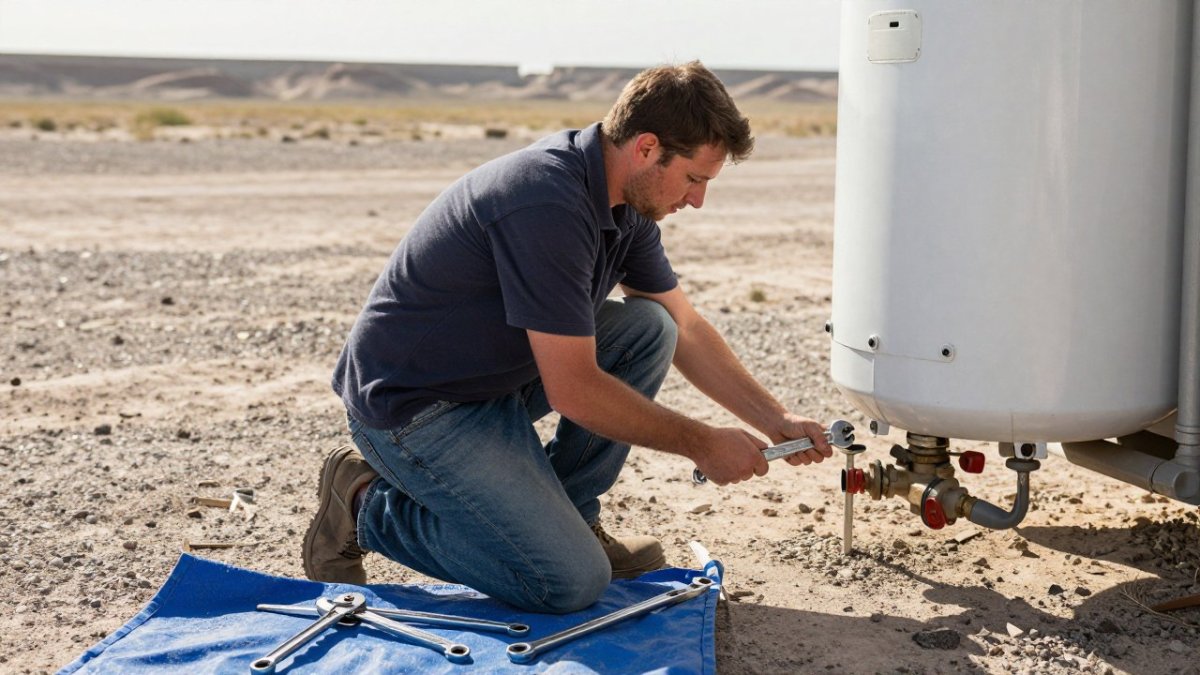
RV appliance repair covers most of what fails on the road. Refrigerators, water heaters, furnaces, air conditioners, stoves, and microwaves account for the majority of service calls.
The technician will test the unit, check power and fuel supply, inspect connections, and replace components like heating elements, thermostats, or control boards.
The key limitation is parts availability.
Basin RV's online parts store carries many common RV appliance components, and we can ship parts quickly if something isn't on the truck, so fewer delays when a repair requires a specific part.
Step 2: Book Your Mobile RV Service Call
Booking a mobile RV service call is straightforward, but timing, location detail, and cost expectations decide whether the visit goes smoothly.
What to have ready before you call
A dispatcher can quote a realistic window and fee only if you provide four things:
Exact location. Not "near Midland" but a street address, campground name and site number, or GPS coordinates. On private land or a lease road, give a landmark and gate instructions. Some RV parks require advance notice or restrict vendor access after hours, so confirm with the park office.
RV year, make, model, and VIN. The VIN lets the technician confirm appliance and system models before arrival, reducing the chance of a second trip for a part.
Symptom description. What fails, when it started, whether it is intermittent, and what you have already tried. A video of an AC short-cycling beats a paragraph of description.
Access and power. Whether the RV is on shore power, whether the problem system is reachable, and whether the technician can park within cord and tool range.
How a service call is confirmed
Most mobile providers use a two-step confirmation: a phone or online request capturing the details above, then a callback or text locking in a date and arrival window (for example, "Wednesday between 10 AM and 2 PM"). Get the window in writing, and confirm whether the diagnostic fee is separate from the trip fee and credited toward the repair if you approve the work.
If the repair is urgent, say so when booking. Basin RV offers 24/7 emergency support when the RV is unusable, but after-hours dispatch usually carries a different fee structure than a standard weekday call, so ask which applies.
Understanding the cost components
A typical quote breaks into four parts:
Trip or service-call fee, covers travel to your location. It may scale with distance from the technician's base, so a site far from town can cost more than one inside city limits.
Diagnostic labor, time to identify the fault. Ask whether it is billed flat or hourly, and whether it is waived if you approve the repair.
Repair labor, billed hourly or by job. Ask for the shop's hourly rate and any minimum labor charge.
Parts, often at list price plus a markup. Ask whether the provider sources parts or whether you can supply your own.
Request a written estimate before work begins. A reputable provider puts the trip fee, diagnostic charge, and expected labor range in writing and calls for approval if the scope changes on-site. Don't accept a verbal "we'll see when we get there" beyond a diagnostic visit.
Watch Out Peak travel season fills mobile technicians' schedules weeks out. Book maintenance and non-emergency repairs early, and keep the confirmation text so you have the window and fee on record.
What to expect when the technician arrives
The technician will walk the problem with you, confirm the diagnosis, and give an on-site estimate before starting. If a part isn't on the truck, expect a follow-up visit rather than an improvised fix. Ask for the work order and parts list at the end to keep your service history complete for warranty and resale.
RV Electrical Troubleshooting During Your Service Appointment
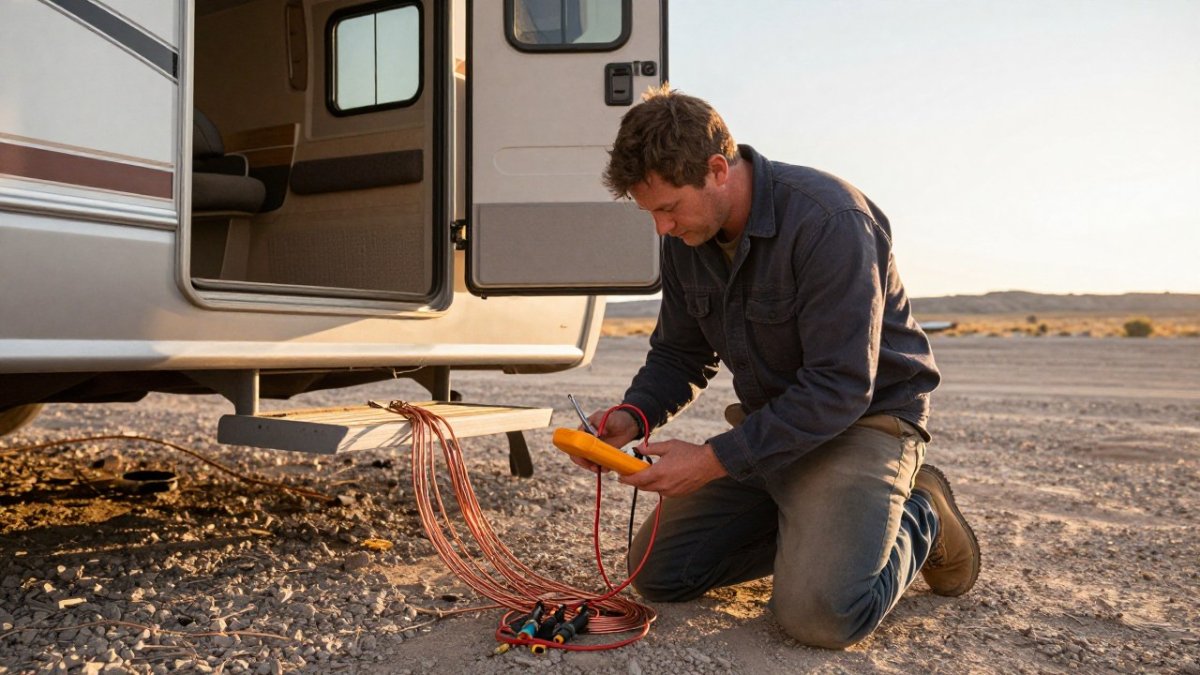
Electrical problems are among the most common, and most mysterious, issues RV owners face. Your RV runs on two separate systems: 120-volt AC power (like your home) and 12-volt DC power (from the battery).
During the service appointment, the technician will test both systems.
The most common electrical fix is simple: a tripped breaker or a loose battery terminal. These take minutes to resolve.
Electrical problems can cascade: a weak battery might stop your slide-out from closing, and a failed converter means you're running on battery power even when plugged in, draining it fast.
When to Visit an RV Repair Shop Instead of Mobile Service
Mobile service handles most breakdowns, but some jobs genuinely need a shop, knowing the difference before you book saves a wasted trip fee. The harder question is often not where to take the RV but whom to trust with it.
Repairs that belong in a shop
A mobile technician works out of a truck with hand tools and a limited parts inventory, fine for diagnostics, appliance swaps, electrical component replacement, and most plumbing, but not for:
Structural or collision damage, frame, sidewall, or roof damage that affects the RV's integrity needs a controlled bay, jigs, and often a body shop.
Major water intrusion, a roof leak that has soaked into walls or delaminated the floor requires tear-out and rebuild, not a tube of sealant.
Extensive rewiring or panel replacement, a full 120-volt panel swap or a rewire of multiple circuits is a shop job.
Custom fabrication, upholstery, or interior modification, mobile techs focus on mechanical and electrical repair, not carpentry or reupholstery.
Warranty work that requires an authorized service center, check your warranty paperwork; some coverage specifies shop service, and using a non-authorized provider can void the claim.
The trade-off is time. A shop visit usually means dropping the RV off and waiting days or weeks, but for complex or structural work the quality and warranty justify the wait. Basin RV provides fast, reliable mobile and shop-based maintenance and repair services for RV owners across the Permian Basin, so we can assess whether your issue needs a bay or a truck.
How to vet a mobile RV technician
Most mobile providers are small operations, so verification falls on you. Ask these questions before you book:
Insurance. Ask for a certificate of general liability insurance and confirm it is current. A technician working on your RV without liability coverage leaves you exposed if something is damaged.
Qualifications and certifications. Ask what training or certification the technician holds, for example, RV Industry Association (RVIA) technician certification or manufacturer-specific training. Certification is not a guarantee, but it signals a baseline of competence.
Warranty on work. Ask how long the provider warrants its labor and whether parts carry a separate manufacturer warranty. Get the terms in writing.
Parts sourcing. Ask whether the provider stocks common parts on the truck, how long special orders typically take, and whether you can supply your own part.
Reviews. Read reviews on more than one platform and look for patterns, repeated complaints about no-shows or surprise charges matter more than a single bad review. Ask for references from recent jobs in your area if reviews are thin.
Written estimate and payment terms. A provider that will not put an estimate in writing before the visit is a red flag. Confirm accepted payment methods and whether a deposit is required.
Key Takeaway A short phone conversation that covers insurance, warranty terms, and parts availability tells you more about a mobile technician than any directory listing. Ask before you book, not after the truck arrives.
If a provider cannot answer these questions clearly, keep calling. The right technician will welcome them.
Preparing for Your Technician's Arrival
Preparation makes the service call faster and more productive. Clear the area around the problem system, room to work near the rooftop AC unit, or access to the water heater compartment.

Gather your RV's manual, previous service records, warranty information, and a description of what you've noticed, when the problem started and what you've already tried.
Have your keys ready and make sure someone is present during the visit. The technician will need access to your RV and may need to ask questions while diagnosing the problem.
For electrical work, make sure all breakers are in the "off" position before the technician arrives. This prevents accidental shocks and protects equipment.
Pro Tip Take photos or video of the problem before the technician arrives if it's something intermittent. Showing a technician a video of your AC cycling on and off every 30 seconds tells them more than describing it.
Common Mistakes to Avoid When Arranging Mobile RV Repair
The biggest mistake is waiting too long. A refrigerator that's cooling slowly might just need a thermostat, but six months of continued use can damage the compressor.
Another common error is vague location details.
Don't assume mobile repair can't handle your problem without calling first. Many RV owners think they need to tow to a shop when mobile service would work fine.
Avoid DIY fixes if you're not confident. RV electrical and propane systems are dangerous if mishandled. A wrong move can create a safety hazard or cause more damage.
Finally, don't ignore the warranty. If your RV is under warranty, some repairs might be covered. Check before you pay out of pocket.
Getting your RV back on the road shouldn't mean weeks without your vehicle or expensive towing bills. Basin RV provides transparent pricing, 24/7 emergency support, and expert technicians who can handle everything from appliance diagnostics to electrical troubleshooting on-site.
Frequently Asked Questions
What can a mobile RV repair technician fix at my location?
Mobile RV repair technicians handle on-site diagnostics and repairs for appliances, electrical systems, plumbing, HVAC units, water heaters, slide-outs, and awnings. Major structural work, collision damage, or extensive rewiring typically requires a shop visit. Most technicians can provide a diagnosis immediately and complete many repairs during a single service call without towing your RV.
How quickly can mobile RV repair arrive for an emergency in the Permian Basin?
Response times depend on your location and the service provider's availability. Many providers offer 24/7 emergency support, but actual arrival may range from same-day to next-day depending on distance from their base and current workload. When calling, provide your exact location and ask about their emergency response window so you know what to expect.
How do I know if I need a mobile RV service call or a repair shop visit?
Use mobile service for diagnostics, appliance repairs, electrical troubleshooting, plumbing fixes, and routine maintenance you can address on-site. Visit a repair shop for structural damage, collision repairs, major rewiring, roof leaks requiring interior work, or engine transmission issues. If you're unsure, call a technician to discuss your problem, they can advise whether mobile or shop service makes sense.
What information should I have ready when booking mobile RV repair?
Prepare your RV's year, make, model, and VIN. Describe the specific problem in detail (sounds, warning lights, when it started). Note your exact location or address, preferred appointment dates and times, and any access restrictions (gates, narrow roads). Have your phone number ready for the technician to confirm arrival time. If you've had recent work done, mention it, it helps diagnose new issues faster.
Book Services
Comments