
How to Book a Mobile RV Diagnostic Visit Without Guesswork

Last Updated: November 5, 2026
Quick Summary
Book a mobile RV diagnostic visit by contacting the provider, describing your symptoms precisely, and confirming the diagnostic fee and travel cost before you agree. A mobile RV diagnostic covers an on-site inspection of the failing system plus a repair estimate, but it is not a repair appointment. Ask whether the fee is credited toward the repair and what the workmanship warranty covers.
Clear access to the electrical panel, water bay, and appliance before the technician arrives.
The diagnostic fee pays for time, travel, and testing, not the repair itself.
Ask whether the diagnostic fee is credited if you approve the repair.
Burning smells, smoke, or sparks mean stop and get help now, not a scheduled visit.
Basin RV offers a 90-day workmanship warranty on installations.
Table of Contents
Booking a Mobile RV Diagnostic Visit: What Actually Happens
Booking a mobile RV diagnostic visit is the process of scheduling a technician to come to your rig, inspect the failing system, and tell you what is wrong before any repair work begins. Basin RV provides these visits across the Permian Basin, and uncertainty about what happens, what it costs, and how long the rig sits unusable is one of the most common frustrations RV owners face. This guide removes that guesswork.
Here is the practical reality most guides skip. A diagnostic visit is not a repair appointment, and treating it as one is where bookings go sideways.
Below, we walk through what the visit covers, how to prepare, what the fee does and does not buy, and the questions to ask before you confirm. If you want the wider regional picture first, our guide to mobile RV repair in the Permian Basin covers how service works across the area.
What a Mobile RV Diagnostic Visit Covers On-Site
A mobile RV diagnostic visit covers a hands-on inspection of the system that is failing, plus a written or verbal assessment of what repair it needs. The technician tests the specific complaint, checks related components, and gives you a repair estimate before touching anything else.
Mobile RV repair services commonly cover air conditioning, electrical, and plumbing systems, so a single visit can sometimes span more than one system. A technician will typically test the failing system, check related components, and explain repair options before work starts.

What most guides miss is that the technician is diagnosing, not necessarily fixing. Some jobs need shop tools or parts that are not on the truck. A common mistake is assuming the visit ends with a working appliance the same day.
Your RV Repair Appointment Checklist Before the Technician Arrives
Your RV repair appointment checklist should make the rig accessible and the problem reproducible. Clear the area around the failed system, note when the issue happens, and have your paperwork ready.
Use this checklist before the mobile technician pulls in:
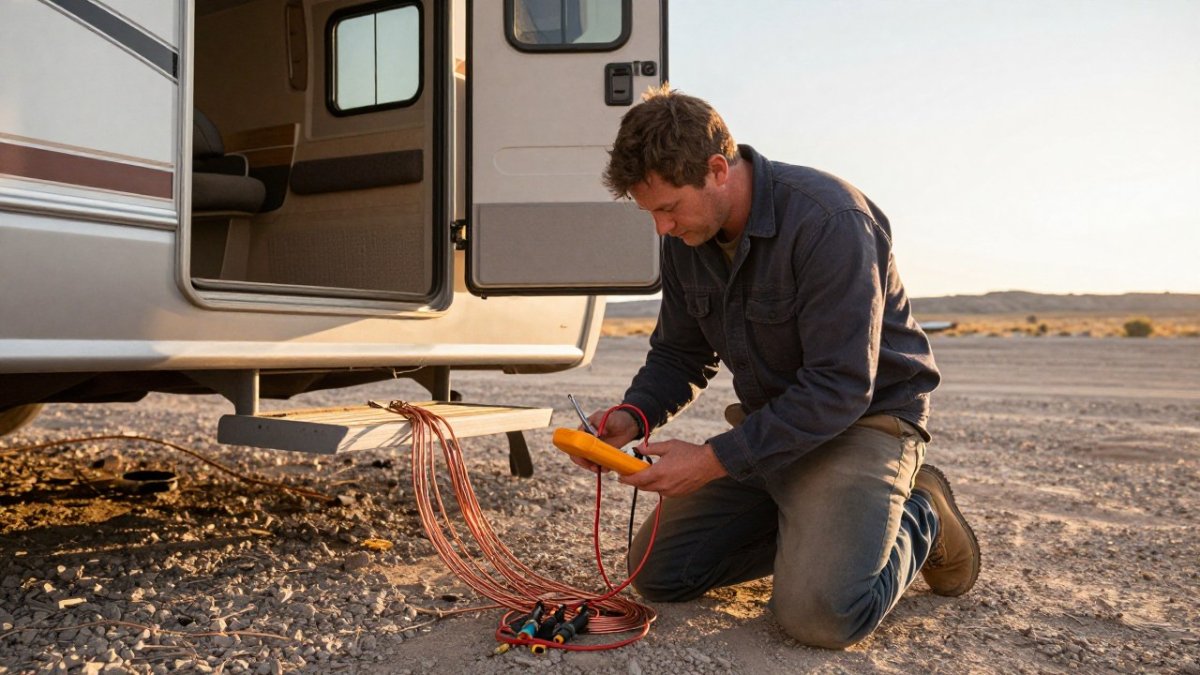
Clear access to the electrical panel, water bay, and appliance
Note exactly when the problem occurs (startup, under load, after rain)
Write down any error codes or warning lights
Have your RV make, model, and year handy
Gather warranty paperwork if the rig is covered
Secure pets and clear the driveway or campsite pad
Confirm the service address and gate codes in advance
Access is not a formality. On-site diagnosis depends on safe access and service conditions, and some jobs are simply not feasible where the RV is parked. A rig wedged under a low campground canopy or parked on soft ground can block a repair before it starts.
What the RV Diagnostic Fee Pays For and What It Does Not
The RV diagnostic fee pays for the technician's time, travel, and testing to identify the fault. It does not automatically cover the repair itself, and it does not guarantee parts are in stock. Understanding this split prevents the surprise-bill complaint we hear most.
Diagnostic visits can include several separate charges, and knowing what each one covers helps you compare quotes:
Service-call or travel charge. Some providers charge a fee to travel to your site, which may vary with distance.
Diagnostic time. Some providers bill diagnosis as a flat fee; others bill by the hour.
Labor rate. Applies to repair work once the fault is identified.
After-hours or emergency rates. Evening, weekend, and holiday rates can differ from standard rates.
For Basin RV's current pricing, see the pricing page on our website or request a quote.
Coverage of a diagnostic fee varies by provider. Ask Basin RV directly what is included in its diagnostic visit and what is billed separately.
Ask how the estimate gets approved before anyone turns a wrench. Confirm the approval process with your provider before booking, including whether approval is required before repair begins and how any diagnostic charge is handled if you decline the work.
Watch out: confirm whether the diagnostic fee is credited toward the repair if you approve the work. Our guide to requesting mobile RV repair in Odessa walks through the request process step by step.
How to Describe Symptoms With an RV Troubleshooting Checklist
An RV troubleshooting checklist turns a vague complaint into a diagnosable symptom. Describe what fails, when it fails, and what you have already tried, and the technician arrives prepared instead of guessing.
Use this structure when you call or submit a service request:
What: "The A/C runs but blows warm air"
When: "Only after 20 minutes, worse in afternoon heat"
Where: "Rear unit, front unit works fine"
What you tried: "Checked the breaker, cleaned the filter"
What changed: "Started after a rough stretch of road"
The more precise your description, the faster the technician can triage urgency. Before you book, sort the symptom into one of three buckets so you know whether to wait for an appointment or call for immediate help:
Stop and get help now. Burning smells, smoke, scorched outlets, a hot electrical panel, propane or sewer odor, sparks, or any shock from a fixture. These point to fire or health hazards. Shut off the affected system at the breaker or valve, evacuate if the smell is strong, and treat it as an emergency rather than a scheduled visit.
Book soon, but it can wait a day or two. A single appliance that will not run, an A/C that cools poorly, a slow leak you can catch in a bucket, a fridge that will not hold temperature on electric but works on propane. The rig is still livable and there is no safety hazard.
Monitor and document. Intermittent faults, a warning light that cleared, a slide that hesitated once. Log when it happens and book a diagnostic when the pattern is clear enough to reproduce.
Say plainly whether the rig is livable right now, because that changes how a provider prioritizes your call.
A few specifics make the description more useful. Note the RV's make, model, and year, the system brand if you can read it off the unit (A/C, fridge, converter, inverter), and whether the problem shows up on shore power, generator, battery, or all three.
Watch out: do not reset a breaker repeatedly or keep powering a system that trips, smells hot, or sparks. Repeated resets can turn a cheap fix into a burned harness or a fire, and they erase the symptom pattern the technician needs to diagnose it.
What to Ask Before You Confirm a Mobile RV Service Call
Before you confirm a mobile RV service call, ask five questions: what the diagnostic fee is, whether it is credited toward repair, what the service area and travel fee are, whether the technician is certified, and what the warranty covers.
The questions that matter most:
"What is the total diagnostic fee, including travel?" Get the number before you agree.
"Is the fee credited if I approve the repair?" Ask directly.
"What is your service area, and is there a travel fee?" Confirm your address is covered.
"What qualifications and experience does the technician have?" Ask before booking.
"What does your workmanship warranty cover, and for how long?" Ask what happens if you leave the area.
"Do you handle warranty repair, or is that separate?" Warranty work often follows different rules.
Basin RV offers a 90-day workmanship warranty on installations. Confirm what it covers and whether it applies if you travel outside the area. Ratings and reviews help, and a clear written estimate is also worth asking for.
Ask these questions before you agree to the visit so the fee and coverage are clear.
Question to ask | What to confirm |
What is the total diagnostic fee, including travel? | Get the number before you agree |
Is the fee credited if I approve the repair? | Ask directly and get it in writing |
What is your service area, and is there a travel fee? | Confirm your address is covered |
What qualifications and experience does the technician have? | Ask before booking |
What does your workmanship warranty cover, and for how long? | Ask what happens if you leave the area |
Do you handle warranty repair, or is that separate? | Warranty work often follows different rules |
When On-Site Service Is Not the Right Call
On-site service may not suit repairs that need a lift, major structural work, or parts not carried on the service vehicle. In those cases, a shop-based repair may be needed.
Situations that usually need more than a driveway visit:
Frame, roof, or slide-out structural damage
Repairs requiring a lift or heavy equipment
Jobs where safe access at the campsite is impossible
Work that needs parts ordered and shipped in
If your situation is urgent, after-hours options exist. Our emergency mobile RV repair guide explains how 24/7 service works, and if the problem is specifically the air conditioner, start with emergency RV AC repair first steps. For after-hours scheduling in the region, see how 24-hour RV repair works locally.
Schedule Your Basin RV Diagnostic Visit
Booking a mobile RV diagnostic visit should end with a clear plan, not a guess. Basin RV is a family-run business that has served the Permian Basin for seven years, offering up-front pricing and 24/7 emergency support.
To book, contact Basin RV, describe your symptoms using the checklist above, and confirm the diagnostic fee and travel before you agree. Basin RV offers mobile service that comes to your RV, so no towing is required for on-site repairs, and installations are backed by a 90-day workmanship warranty. DIY owners who want guidance can also use Basin RV's Ask a Tech consultations.
Contact Basin RV to turn a vague breakdown into a diagnosed, quoted repair you can plan around. For current pricing, visit the Basin RV pricing page.
Frequently Asked Questions
How do I book a mobile RV diagnostic visit?
Pick a time through the provider's online booking page or call directly, then give the year, make, and model of your RV plus a short description of the symptoms. Confirm where the RV is parked and whether the site allows service vehicles. Ask what the RV diagnostic fee covers and whether it is credited toward the repair. Basin RV takes requests online or by phone.
What information should I provide when scheduling a mobile RV diagnostic?
Have four things ready: your RV type and length, the exact location with access notes, the systems affected, and when the problem started. Mention any recent work, such as a battery swap or roof reseal, because it narrows the diagnosis fast. If you are in a campground, give the site number and office contact. A complete intake often decides whether the visit is scheduled same-day or later in the week.
Does the RV diagnostic fee include the repair?
It depends on the provider. Ask Basin RV directly what the diagnostic fee includes and whether it applies toward the repair. Ask before booking whether the fee is credited toward the repair if you approve the work, and get that answer in writing. Basin RV offers up-front pricing; for current rates, see the Basin RV pricing page.
Can a mobile technician diagnose an RV at my campsite or storage lot?
Often yes, if the site allows service vehicles and the technician has safe access to the systems being tested. Campgrounds, driveways, and roadside pullouts are common locations for a mobile RV service call. Storage facilities sometimes restrict outside vendors, so clear it with management first. Jobs that need a lift, a bay, or major structural work are usually handled in a shop instead.
Comments