
How to Request Mobile RV Repair in Odessa

Last Updated: October 26, 2026
Quick Summary
Mobile RV repair brings professional diagnostics and maintenance directly to your location, eliminating the need to tow your vehicle to a shop. Whether you're at a campground, work site, or driveway, a qualified technician can assess and often resolve issues on-site.
Mobile RV repair covers routine maintenance, electrical troubleshooting, appliance repairs, plumbing fixes, and HVAC evaluation.
Pricing combines a service-call fee, diagnostic fee, hourly labor, and parts; ask all providers the same five questions to compare quotes fairly.
Basin RV offers 24/7 emergency support and a 90-day workmanship warranty on installations.
Prepare your RV by clearing the work area, having keys ready, and providing documentation about previous repairs.
Regular maintenance prevents emergencies: oil changes every 3,000 to 5,000 miles, monthly tire checks, and annual roof seal inspections.
Table of Contents
Understanding Mobile RV Repair Services and On-Site Assistance
Mobile RV repair brings professional diagnostics and maintenance directly to your location, eliminating the need to tow your vehicle to a shop.
The appeal is straightforward: no downtime spent waiting in a service bay, no towing fees, and the ability to stay with your vehicle during repairs. For those living or working in the Permian Basin, mobile RV repair services have become essential, particularly when breakdowns happen far from major service centers.
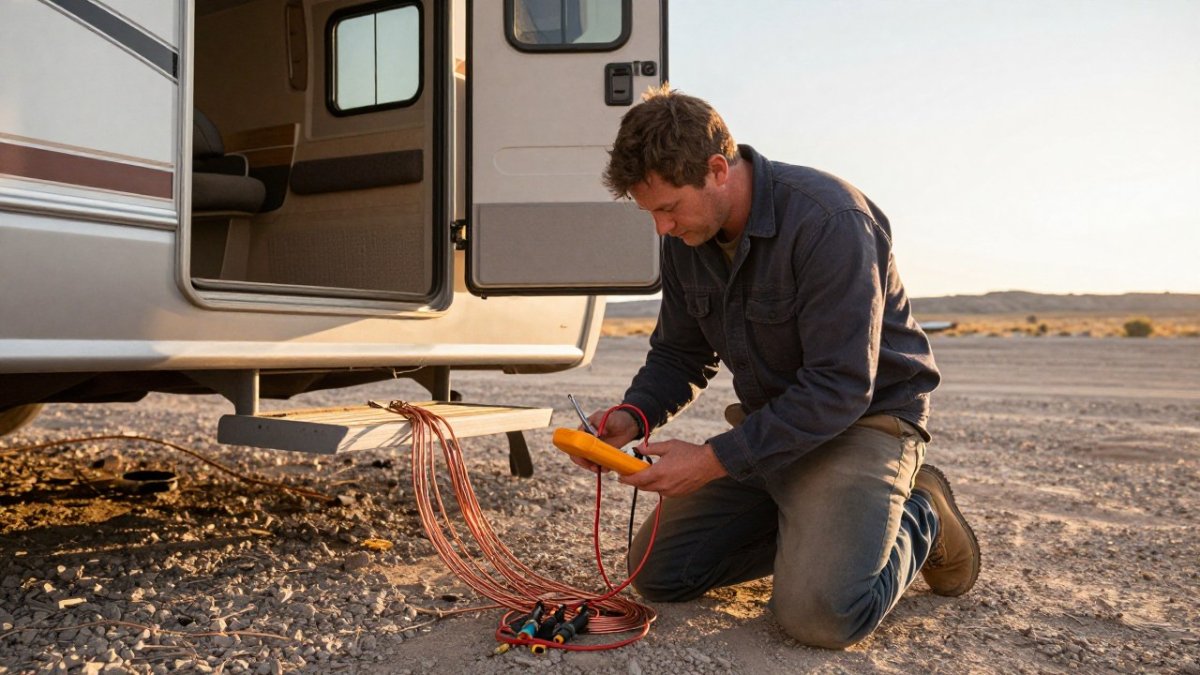
Mobile RV repair covers routine maintenance checks to emergency diagnostics. Common on-site services include electrical troubleshooting, appliance repairs, plumbing fixes, and HVAC evaluation. More complex structural or engine work may require shop-based service, but many issues resolve without leaving your location.
Step-by-Step Process for Requesting Mobile RV Repair
Getting professional mobile RV repair involves a clear sequence: assess your issue, contact a technician, prepare your space, and confirm appointment details.

Assess Your RV Issue Before Calling
Before you call, note when the problem started, what symptoms you're seeing, and any error codes or warning lights. If your water heater isn't producing hot water, mention whether it's propane or electric.
This helps the technician prepare, bring the right parts or diagnostic equipment, and give a more accurate estimate. Write down your RV's make, model, and year, these details matter for ordering parts or confirming compatibility.
Contact Your Mobile RV Technician Near Me
Call or message your local mobile RV technician with your vehicle details and issue description; many providers offer online booking or text scheduling. Be clear about your location and whether you're stationary or traveling; at a campground, provide the site number and any access restrictions.
Ask about availability, response time, and on-site diagnosis. Confirm they service your RV type, since motorhomes, travel trailers, and fifth wheels sometimes require different approaches. At Basin RV, we offer 24/7 emergency support.
Prepare Your RV and Location for the Service Call
Clear the area around the problem so the technician can access it fully, and ensure exterior issues like an awning or roof vent are safely reachable. Have your RV keys ready and any documentation about previous repairs.
A small table or flat surface helps the technician organize tools and parts. In extreme weather, ensure shade or shelter. Communicate site-specific challenges: narrow parking, low-hanging branches, or tight maneuvering space.
Mobile RV Repair Cost and Pricing Transparency
Pricing is the question most RV owners ask first, and it's where mobile repair differs most from a shop visit. Instead of a single posted labor rate, a mobile invoice combines a service-call or trip fee, a diagnostic fee, hourly labor, and parts. Understanding each lets you compare quotes fairly and avoid surprises.
The Four Common Fee Types
Service-call / trip fee. A flat charge that covers fuel, drive time, and vehicle wear to reach your location. It is usually quoted separately from labor and may scale with distance from the technician's base. Ask whether the fee is waived if you approve the repair on the same visit.
Diagnostic fee. A charge for the initial assessment, typically a fixed amount or the first hour of labor. Some providers credit the diagnostic fee toward the repair if you proceed; others do not. Confirm this before booking.
Labor. Billed hourly or in increments (often half-hour or quarter-hour blocks). Rates vary with the technician's certification level and the complexity of the system, chassis and engine work generally runs higher than appliance or plumbing work.
Parts. Usually billed at list or cost-plus markup. Ask whether the technician sources OEM or aftermarket parts and whether you can supply your own.
What Drives the Final Number
Several factors move the estimate up or down:
Access and location. An open pull-through site is faster to service than a tight back-in spot with low branches. Remote locations add drive time.
System complexity. A water-heater igniter swap is short; tracing an intermittent 12-volt fault can take hours.
Parts availability. Common consumables (fuses, thermostats, water-pump diaphragms, sewer valves) are often on the truck. Special orders add lead time and freight.
After-hours or emergency dispatch. Nights, weekends, and holidays often carry a premium. Ask for the rate card in advance.
RV age and prior work. Previous DIY repairs or corroded fittings can extend labor.
How to Compare Quotes Apples-to-Apples
Ask every provider the same five questions: (1) What is the trip fee, and is it credited toward the repair? (2) What is the diagnostic fee, and is it credited? (3) What is the hourly labor rate, and how is time rounded? (4) Are parts OEM, aftermarket, or customer-supplied? (5) Is there a written estimate, and will you be notified before any work exceeds it?
Pro Tip Request the estimate in writing, text or email is fine, and confirm that no additional work will begin without your approval. A reputable mobile technician will put the scope and price in writing before turning a wrench.
Budgeting for the Unpredictable
Because mobile repair is often reactive, set aside a maintenance reserve rather than budgeting only for scheduled service. Track what you spent on repairs over the past 12 months and hold a similar amount for next year, keeping it separate from travel money so a breakdown doesn't derail a trip.
Watch Out Be cautious of any quote given over the phone without seeing the RV. A legitimate technician will give a range and explain that the final price depends on what diagnostics reveal. A firm price with no inspection is a red flag.
At Basin RV, we offer transparent, up-front pricing. Our mobile RV repair cost page breaks down typical service categories so you can plan ahead.
Mobile RV Appliance Repair and Diagnostics On-Site
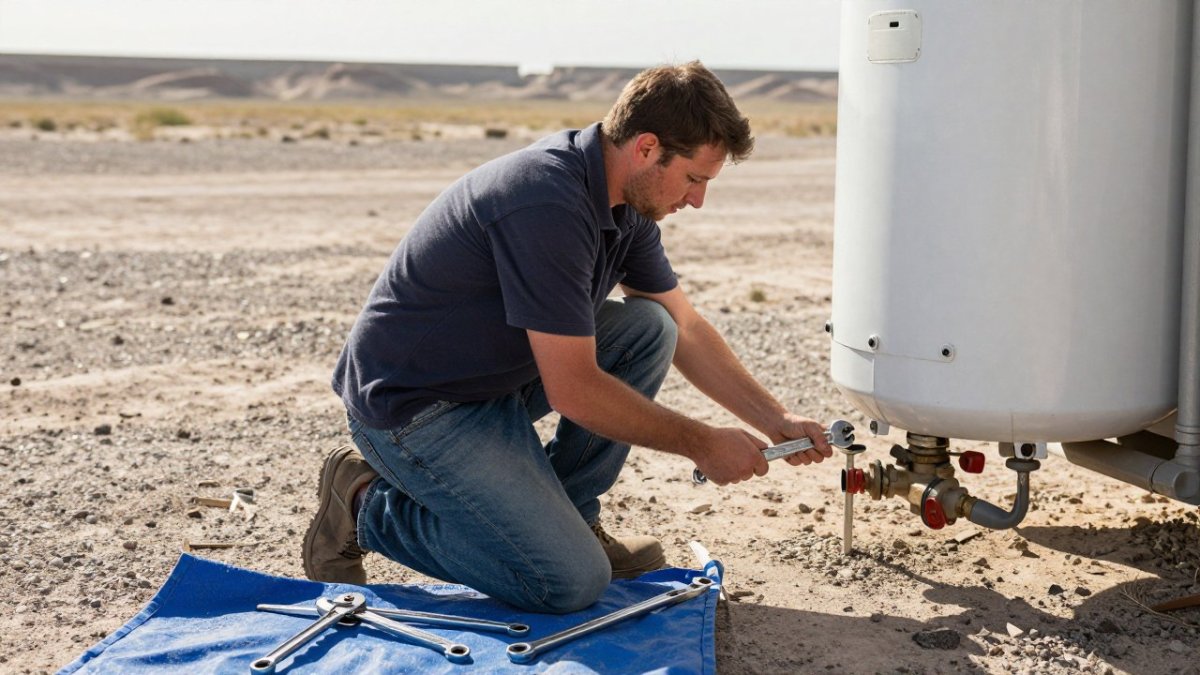
Many RV appliances can be diagnosed and repaired on-site. Water heaters, refrigerators, stoves, and furnaces are common targets.
Diagnostics involve checking electrical connections, fuel lines, and system controls. For a refrigerator that won't cool, the technician tests the propane supply, heating element, and thermostat.
Appliance repairs that don't require structural work, like replacing a heating element, fixing a valve, or rewiring a control board, typically happen on-site.
RV Maintenance Schedule to Prevent Emergency Repairs
Regular maintenance prevents most emergencies. Check your owner manual for the manufacturer's schedule, but general guidelines are straightforward: oil changes every 3,000 to 5,000 miles or annually, whichever comes first; tire pressure and condition monthly; water system sanitization once or twice yearly, depending on usage.
Seasonal maintenance matters too. Before winter, drain and winterize your water system in cold climates (RV Water Heater Maintenance: Your Complete Guide - RV Help Blog). Before summer travel, test the air conditioning and fill propane tanks.
Preventive mobile RV repair appointments can be part of a maintenance plan.
How to Evaluate and Verify Your Mobile RV Technician
Choosing a mobile technician is a trust decision: you're inviting a stranger to work on your home, often in a remote location. A short, structured verification process protects your wallet and your rig.
Credentials and Training
Ask what certifications the technician holds and who issued them. Relevant credentials include RV Industry Association (RVIA) technician certification and manufacturer-specific training (for example, appliance or chassis OEM courses). Certification isn't mandatory in every state, but it signals tested knowledge. Ask how long they've worked on RVs and whether they specialize in your rig type, a Class A diesel pusher, travel trailer, and truck camper present different systems.
Insurance and Business Standing
A professional mobile technician should carry general liability insurance and, with employees, workers' compensation coverage. Ask for a certificate of insurance; a legitimate operator will provide one without hesitation. Confirm the business name and, where applicable, state registration or a local business license, which matters if a repair goes wrong and you need recourse.
Warranty and Workmanship Guarantee
Ask what warranty covers the work and for how long. Common practice is a workmanship warranty measured in days or months, separate from any manufacturer parts warranty. Get the warranty terms in writing, including what voids it (for example, customer-supplied parts or subsequent DIY work).
Reviews, References, and Red Flags
Read reviews on independent platforms, not just the provider's own site. Look for patterns: repeated complaints about no-shows, surprise charges, or unresolved comebacks matter more than a single bad review. Ask for references from customers with a similar RV and repair type.
Watch Out Red flags to watch for: quotes given without inspection, pressure for immediate cash payment, no written estimate, no verifiable business name, and reluctance to provide insurance or warranty terms. Any one of these is reason to slow down.
The Pre-Booking Question Set
Run through these questions before you commit:
Are you RVIA-certified or manufacturer-trained, and in what systems?
Can you provide a certificate of insurance?
What is your workmanship warranty, and what does it cover?
Will you provide a written estimate before work begins?
Do you carry common parts for my RV type, or will parts be special-ordered?
What is your diagnostic process, and is the diagnostic fee credited toward the repair?
How do you handle a repair that turns out to be more complex than expected?
Key Takeaway A qualified mobile technician will answer all seven questions clearly and in writing. Hesitation on insurance, warranty, or written estimates is your cue to keep looking.
At Basin RV, installations are backed by a 90-day workmanship warranty.
Emergency and After-Hours Mobile RV Repair Planning
Breakdowns don't follow business hours. A plan for emergency mobile RV repair ensures you're not stranded. Save your technician's contact information before you need it.
When you call for emergency service, describe the situation clearly and follow the dispatcher's guidance. Some issues, like a propane leak, require immediate attention and possible evacuation.
Have a backup plan too. Keep your RV's documentation and warranty information accessible. Emergency mobile RV repair guidance can help you prepare a response plan before a crisis hits.
Booking Your Mobile RV Repair Service
Once you've selected a technician and confirmed availability, booking is typically straightforward. Most providers ask for your location, RV details, and a description of the issue.
Confirm payment methods and whether deposits are required. Some mobile RV repair providers ask for payment upfront; others bill after completion.
Prepare your RV as discussed earlier and be ready when the technician arrives.
Finding reliable mobile RV repair in the Permian Basin means having a trusted partner who understands your needs and delivers transparent, professional service. Basin RV brings diagnostics and repairs directly to your location with 24/7 emergency availability, upfront pricing, and a 90-day workmanship warranty on installations. Book services with Basin RV today.
Service Type | Typical Timeframe | Best For |
Diagnostic assessment | 30-60 minutes | Identifying the problem |
Appliance repair | 1-3 hours | On-site fixes like water heaters or refrigerators |
Electrical troubleshooting | 1-2 hours | Wiring, battery, or control issues |
Plumbing repair | 1-2 hours | Leaks, valve replacement, or system checks |
Preventive maintenance | 2-4 hours | Seasonal checks and fluid services |
Emergency response | Varies | Critical failures requiring immediate attention |
Frequently Asked Questions
What information should I provide when booking mobile RV repair?
When you contact a mobile RV technician, have ready: your RV type (motorhome, travel trailer, fifth wheel), the specific issue or symptoms you're experiencing, your current location, and your preferred appointment window. If you know your RV's year and model, that helps the technician prepare. Describe what you've noticed, unusual sounds, leaks, appliance failures.
Can a mobile RV technician diagnose electrical or appliance problems on-site?
Basin RV offers on-site appliance and electrical diagnostics. Major structural repairs may require shop-based service.
How often should I service my RV to avoid emergency repairs?
Basin RV provides maintenance services for RV owners.
What repair types require a shop visit instead of mobile RV repair?
Basin RV offers on-site appliance and electrical diagnostics, as well as major shop-based structural repairs.
Comments