
Fast RV Appliance Repair for Travelers Who Can't Wait

Last Updated: November 15, 2026
Quick Summary
Fast rv appliance repair starts with triage: check the power source, breaker, fuses, and propane before calling a tech. If you smell propane, see scorch marks, or find water near electrical parts, shut it down and call a certified technician. Otherwise, book a mobile technician who comes to your rig, and confirm the service area and response time before booking.
A tripped breaker or blown fuse is the most common cause of a dead appliance and a two-minute fix.
Stop troubleshooting and shut down if you smell propane, see scorch marks, or find water near electrical components.
Ask the campground host or office which mobile techs serve the area.
Summer weekends and holiday weeks are the busiest windows for air-conditioning and refrigerator calls.
Basin RV backs installations with a 90-day workmanship warranty.
Appliance down on the road?
Basin RV sends a mobile tech to your rig with up-front pricing and 24/7 emergency support.
Table of Contents
Why Fast RV Appliance Repair Matters When You're on the Road
A dead refrigerator or a failing air conditioner turns a campsite into a crisis within hours.
Speed matters for three reasons. Food safety, comfort in extreme heat, and the cost of being stranded. A refrigerator that quits in summer can spoil food quickly. An air conditioner that fails in a West Texas July makes the rig unlivable.
Many appliance failures can be diagnosed and sometimes repaired on site. The catch is knowing what to check yourself, when to stop, and how to get a qualified technician to your rig quickly.
RV Appliance Troubleshooting: Triage Steps Before You Call a Tech
RV appliance troubleshooting starts with three questions: Is it safe? Is it a power problem? Is it a quick fix? Answer those before you pick up the phone, and you will save time and money.
Work through this order:
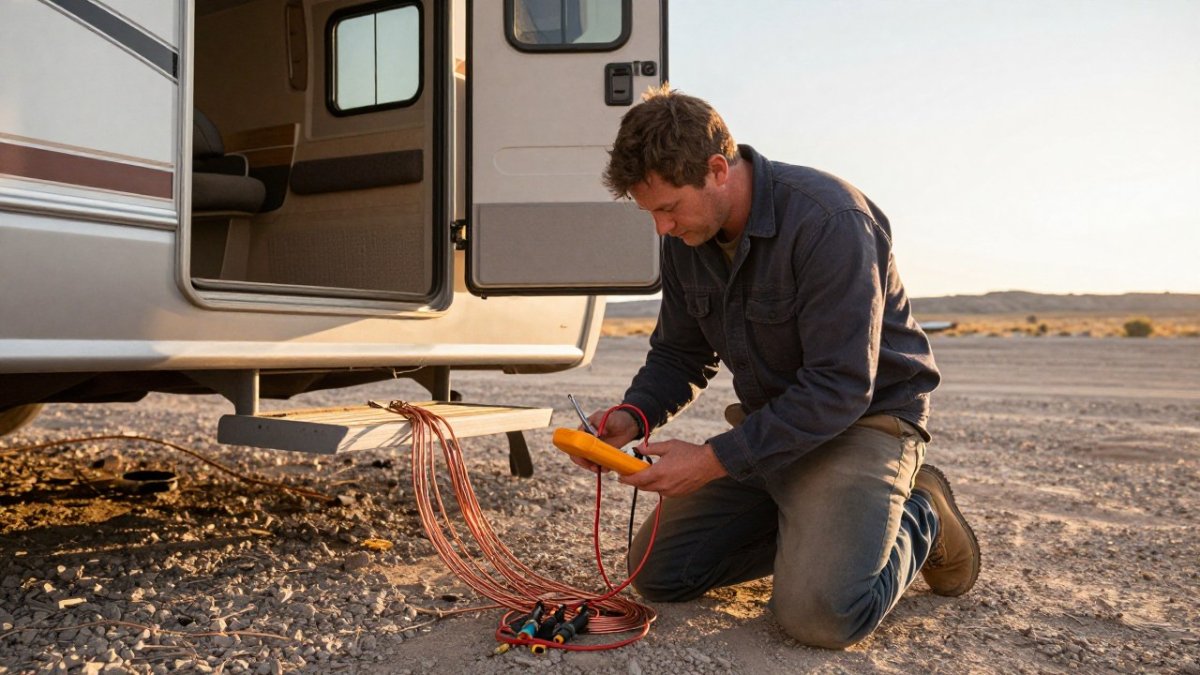
Check the power source. Confirm the rig is on shore power or that batteries are charged. Test the outlet or breaker feeding the appliance.
Check the breaker and fuses. A tripped breaker or blown fuse is the most common cause of a dead appliance, and it is a two-minute fix.
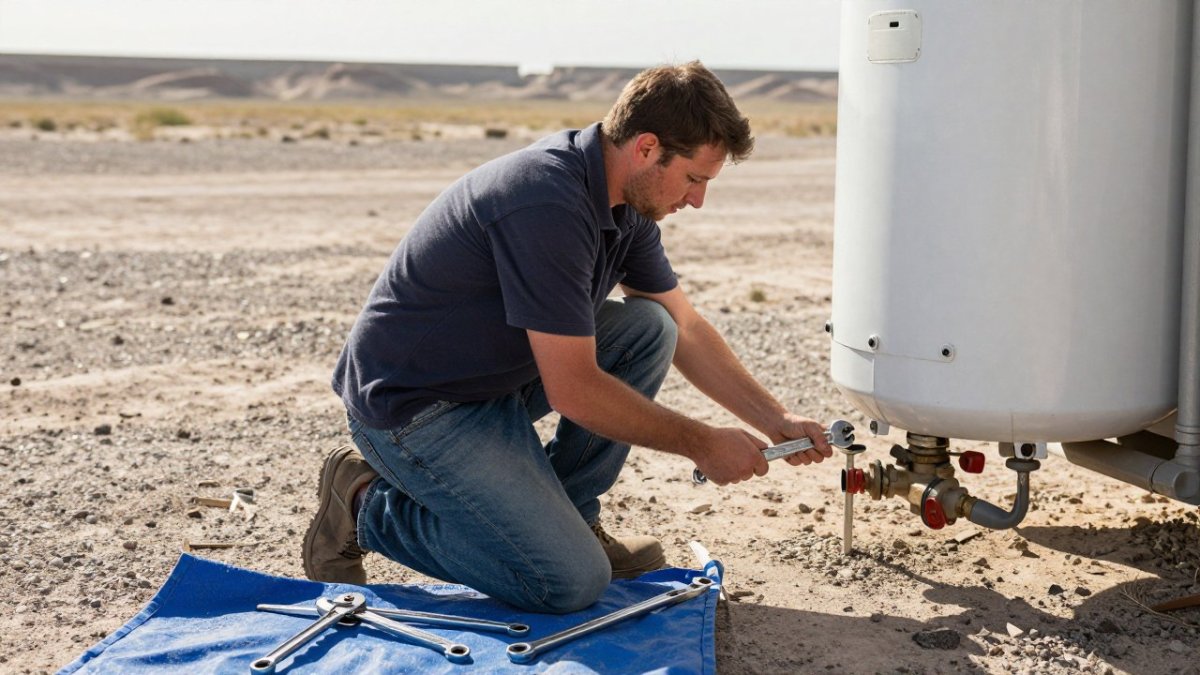
Check propane for gas appliances. For a fridge, stove, or water heater, confirm the tank has fuel and the valve is open.
Look for obvious symptoms. Warm fridge with a running compressor, ice buildup, a clicking furnace, or water pooling under the rig all point to specific faults.
Note the model and brand. Model numbers help speed up diagnosis.
When to Stop Troubleshooting and Shut It Down
Stop immediately if you smell propane, see scorch marks, notice a burning smell, or find water near electrical components. Shut off the appliance, cut the breaker, and close the propane valve. Do not keep testing.
Any propane leak, damaged wiring, or overheated component is a job for a certified technician. Continuing to troubleshoot risks fire or carbon monoxide exposure. If you are unsure whether a fault is electrical or gas-related, treat it as gas-related and stop.
Finding On-Site Help Between Service Areas
The hardest part of breakdowns for travelers is location. You may be miles from the nearest town, and towing the rig to a shop can cost more than the repair itself.
Here is how to find help fast when you are between service areas:
Ask the campground host or office. They usually know which mobile techs serve the area.
Search for mobile repair, not just "RV shop." On-site service avoids towing and gets you fixed where you are parked.
Confirm the service area and response time before booking. Ask how soon a technician can arrive and whether they carry common parts.
If you are stranded well outside a normal service area, it helps to understand how emergency and after-hours mobile repair works before you call. Our guide to emergency mobile RV repair and 24/7 service explains what to expect when you need help fast.
RV Appliance Repair Time: What to Expect From Call to Fix
RV appliance repair time depends on the fault, the appliance, and parts availability. A tripped breaker or loose connection may take minutes. A failed refrigerator cooling unit or a compressor replacement can take hours and may require a return visit if a part must be ordered.
In practice, most on-site visits follow a similar arc:
Diagnosis: the technician tests power, gas flow, and components to isolate the fault.
Repair or part order: simple faults are fixed on the spot; major components may need ordering.
Verification: the appliance runs through a cycle to confirm the fix.
What Affects Response Time
Arrival time is driven by factors you can influence and factors you cannot. The more you can control, the faster the visit.
Your location. A campsite near a service hub gets a technician faster than a remote boondocking spot. When you call, give your GPS coordinates or the nearest cross streets, not just the campground name.
Time of day and season. Summer weekends and holiday weeks are the busiest windows for air-conditioning and refrigerator calls. A weekday morning call often gets a same-day slot that a Saturday afternoon call will not.
Parts on hand. If your model is older or uncommon, a part order and a second visit may be needed.
Urgent vs. Can-Wait: How to Prioritize
Not every breakdown is an emergency. Use these rules of thumb:
Treat as urgent: a failed air conditioner in extreme heat, a refrigerator full of food in warm weather, a propane smell, a burning smell, or water near electrical components. These justify a same-day or after-hours call.
Can usually wait for a scheduled visit: a flickering interior light, a slow-draining sink, a stove burner that lights intermittently, or a water heater that works on electric but not propane.
Stop and shut down: any propane leak, scorch marks, or overheated component. Do not keep testing, call a certified technician.
When you call, say plainly whether the situation is urgent and why. If you are stranded well outside a normal service area, it helps to understand how emergency and after-hours mobile repair works before you call.
Set expectations up front. For a deeper look at how electrical faults are traced step by step, see our guide to RV electrical diagnostics on site.
Here is how quickly different situations tend to move, from a two-minute fix to a same-day call.
Situation | How fast it moves | Note |
Tripped breaker or blown fuse | Two-minute fix | Most common cause of a dead appliance |
Tripped breaker or loose connection | May take minutes | Simple faults fixed on the spot |
Failed refrigerator cooling unit | Can take hours | May need a return visit for parts |
Compressor replacement | Can take hours | Part may have to be ordered |
Failed AC in extreme heat | Same-day or after-hours call | Treat as urgent |
Fridge full of food in warm weather | Same-day or after-hours call | Treat as urgent |
Flickering interior light or slow drain | Can wait for scheduled visit | Not an emergency |
Weekday morning call | Often gets a same-day slot | Saturday afternoon may not |
RV Repair Cost per Hour: Diagnostic Fees, Rates, and Warranty Questions
RV repair cost per hour varies by region, appliance type, and whether the work is mobile or in-shop. Mobile service often carries a call-out or trip charge on top of labor.
Before you approve anything, ask these questions:
What is the diagnostic fee, and is it credited toward the repair?
What is the hourly rate, and is there a trip or call-out charge?
Is the quote flat-rate or time-and-materials?
Transparent providers put these numbers in writing before work begins. To sanity-check the numbers you are quoted, our breakdown of RV repair shop hourly rates gives useful benchmarks, and our guide to avoiding hidden RV repair fees shows where surprise charges tend to appear.
On warranty: a workmanship warranty covers the quality of the repair itself, not unrelated failures elsewhere in the rig. Ask exactly what is covered and what happens if a problem appears after you have traveled on.
RV Repair Appointment Checklist: Preparing for the Visit
A little preparation makes the visit faster and the diagnosis more accurate. But the most useful preparation starts before you book, with a traveler-first triage that tells you whether you need a technician at all, and if so, what to tell them so the first visit is the only visit.
Before You Call: The Traveler Triage
Work through these steps in order before calling for service.
Identify the appliance and its power source. Write down the brand and model number (usually on a sticker inside the fridge door, behind the stove, or on the water heater access panel). Note whether the rig is on shore power, generator, or battery, and whether the appliance runs on 120-volt AC, 12-volt DC, or propane.
Check the obvious shutoffs. Confirm the breaker for that appliance is on, the GFCI outlet has not tripped, and, for gas appliances, the propane tank valve is open and the tank has fuel.
Record the symptoms precisely. "Fridge warm but compressor running" points to a different fault than "fridge dead, no lights." Note when the problem started and whether it followed a power surge, a move, or a refill.
Decide urgency. A failed air conditioner in triple-digit heat or a refrigerator full of food is urgent. A flickering interior light or a slow-draining sink can usually wait for a scheduled visit.
Stop if you smell propane, see scorch marks, notice a burning smell, or find water near electrical components. Shut off the appliance, cut the breaker, and close the propane valve. Do not keep testing. Any propane leak, damaged wiring, or overheated component is a job for a certified technician, continuing to troubleshoot risks fire or carbon monoxide exposure.
Watch out: travelers often reset a breaker repeatedly without finding the cause. If a breaker trips twice, stop and call a technician; a recurring trip usually means a short or a failing component, not a nuisance trip.
What to Have Ready When the Technician Arrives
Appliance brand and model number written down
Symptoms and when they started
Power source confirmed (shore power, generator, or battery)

The Call Checklist: Costs, Fees, and Warranty Questions
Before you approve any work, ask these questions so there are no surprises on the invoice:
What is the diagnostic fee, and is it credited toward the repair if I approve the work?
What is the hourly rate, and is there a separate trip or call-out charge?
Is the quote flat-rate or time-and-materials?
Transparent providers put these numbers in writing before work begins. If a quote feels vague, ask for it in writing. A workmanship warranty covers the quality of the repair itself, not unrelated failures elsewhere in the rig, ask exactly what is covered and what happens if a problem appears after you have traveled on.
One detail most people miss: the model number. Older Dometic and Norcold units have known failure points, and having the model ready lets the technician bring the right part on the first trip instead of scheduling a return.
Book Your Mobile RV Appliance Repair Visit
If your refrigerator, air conditioner, water heater, or stove has failed, the fastest path back to normal is a mobile diagnostic visit.
Basin RV is a family-run business serving the Permian Basin for seven years, offering 24/7 emergency support, mobile service that comes to you, and up-front pricing. No towing is required for on-site work.
Ready to schedule? Our guide on how to book a mobile RV diagnostic visit walks you through the process with no guesswork.
A failed appliance on the road is stressful, but it rarely means your trip is over.
Frequently Asked Questions
How much does RV repair cost per hour?
Hourly rates vary by region and job type, and mobile calls usually carry a separate trip or diagnostic fee on top of labor. Ask for the diagnostic charge, the hourly rate, and whether the diagnostic fee is credited toward the repair before you approve work. Basin RV offers up-front pricing, and you can contact us for a quote.
How long do RV appliance repairs take?
Repair time depends on the fault and whether parts must be ordered. Ask the dispatcher about the likely timeline, and confirm the expected window before you commit.
Can an RV appliance be repaired at a campsite?
Yes, in most cases. Mobile service can often be performed on site, which avoids towing the rig to a shop. Make sure your campsite allows service vehicles and that you have room to open slides and access appliance panels. Confirm the address and gate code when booking so the technician isn't delayed on arrival.
What should I do while waiting for RV appliance repair?
Turn the appliance off at the breaker or gas supply, photograph any error codes or damage, and note when the problem started. Keep the fridge closed to hold temperature, and move perishables to a cooler if the wait will be long. Have your RV's make, model, and appliance brand ready, and clear access to the unit so the technician can start diagnosing the moment they arrive.
Comments