
7 RV Repair Shop Hourly Rates Facts for 2026

Last Updated: November 14, 2026
Quick Summary
An rv repair shop hourly rate is the shop's retail price for labor, not the technician's wage, and it bundles wages, rent, tools, insurance, and front-desk time into one figure. Because each facility sets its own rate, compare full written estimates rather than hourly rates alone.
Technician pay runs from $16.18 to $28.94 an hour, but the shop rate is a separate retail price.
Ask every shop for the labor rate, estimated hours, diagnostic fee, and add-on charges in writing.
Flat-rate guides bill a set number of hours per repair regardless of actual time on the job.
After-hours, weekend, emergency, and mobile calls often add premiums, travel, or mileage charges.
Basin RV offers up-front pricing, 24/7 emergency service, and a 90-day workmanship warranty.
What should an RV repair quote include?
Basin RV provides up-front written estimates for mobile and shop-based RV repairs across the Permian Basin.
Table of Contents
What RV Repair Shop Hourly Rates Actually Cover in 2026
Most RV owners assume the hourly rate quoted by an rv repair shop is what the technician takes home. It is not. According to U.S. Bureau of Labor Statistics wage data for RV service technicians, technician pay runs from $16.18 an hour at the 10th percentile to $28.94 at the 75th percentile. The rate you pay at the counter is a different number entirely.
An hourly labor rate is the amount a repair facility charges for each hour of work performed on your RV. It is not the technician's wage. It is the shop's price for labor, and it bundles several costs into one figure. Basin RV quotes its labor rate up front, so owners can see what they are paying for before any work begins.
Here is what the customer-facing rate typically has to absorb:
Technician wages and payroll taxes
Shop rent, utilities, and insurance
Diagnostic tools and service equipment
Parts inventory and warranty administration
Front-desk and service-writer time
The BLS figures show what technicians earn. They say nothing about what a shop must charge to stay open. Treating the two as the same number is the most common mistake we see when owners shop around.
Technician Wages vs. the Customer-Facing Labor Charge
The distinction explains why two shops with similar overhead can quote very different rates.
A shop paying a senior technician near the 75th percentile carries a higher base cost than one staffed mostly at entry level, and it also needs margin for rent, tools, and diagnostic time on jobs it may not repair.
When you compare a quoted rate to a published wage statistic, you are comparing two different things: the wage is a cost input, the shop rate is a retail price.
Measure | What It Represents | 2026 Reference Point |
Technician wage | What the tech earns per hour | $16.18-$28.94 (BLS, 2023) |
Shop labor rate | What the customer pays per hour | Set by each facility |
Diagnostic fee | Charge to identify the fault | Varies by shop |
Parts and supplies | Materials plus markup | Separate line item |
RV Repair Labor Rates by Shop Type: Dealership, Independent, and Mobile
Dealership service departments, independent shops, and mobile mechanics each price labor differently, and the right choice depends on what your RV needs. The hourly rate is only one input; the total invoice also depends on diagnostic fees, minimum charges, parts markup, travel, and how long the shop keeps your rig. Comparing shop types on rate alone is how owners end up surprised at the counter.
Frame the comparison by what each shop type is built to do. Each shop type is set up for different work, and the right choice depends on what your RV needs.
Treat any quoted rate as a starting point and compare the full estimate.
What separates the three shop types in practice:
Ask each shop for the same numbers on the same job: the labor rate, the estimated hours, the diagnostic fee and whether it is credited, and any minimum or add-on charges. That gives you a total-cost estimate to compare side by side.
Shop type | Typical strength | Watch for in the estimate |
Dealership | Warranty and brand-specific work | Higher posted rate, longer wait, diagnostic credit rules |
Independent shop | Routine and out-of-warranty repairs | Flat-rate vs. actual-time billing, parts markup |
Mobile service | On-site convenience | Travel, mileage, after-hours premiums, job limits |

If you want to see how a clear, itemized estimate looks side by side with a vague one, our guide on transparent pricing for RV maintenance walks through a fair estimate line by line.
How to Read an RV Repair Estimate Without Surprises
The fastest way to compare estimates is to check four things on every quote: the labor rate, the estimated hours, the parts markup, and the add-on charges. If any of those is missing, ask for it in writing before you authorize work.
A repair estimate is a written projection of the labor hours, parts, and fees a job will require, and it should itemize each one. An estimate that lists only a total gives you nothing to check.
Here is the checklist we suggest owners run through:
Is the hourly labor rate stated clearly?
Are estimated labor hours listed per repair?
Are parts itemized with part numbers?
Is the diagnostic fee separate or rolled into labor?
Are shop supplies and taxes shown as line items?
Is there a stated minimum charge?
Does the quote note what happens if the job runs long?
If you want to see what a clear, itemized estimate looks like side by side with a vague one, our guide on transparent pricing for RV maintenance walks through a fair estimate line by line.
What an RV Repair Diagnostic Fee Pays For
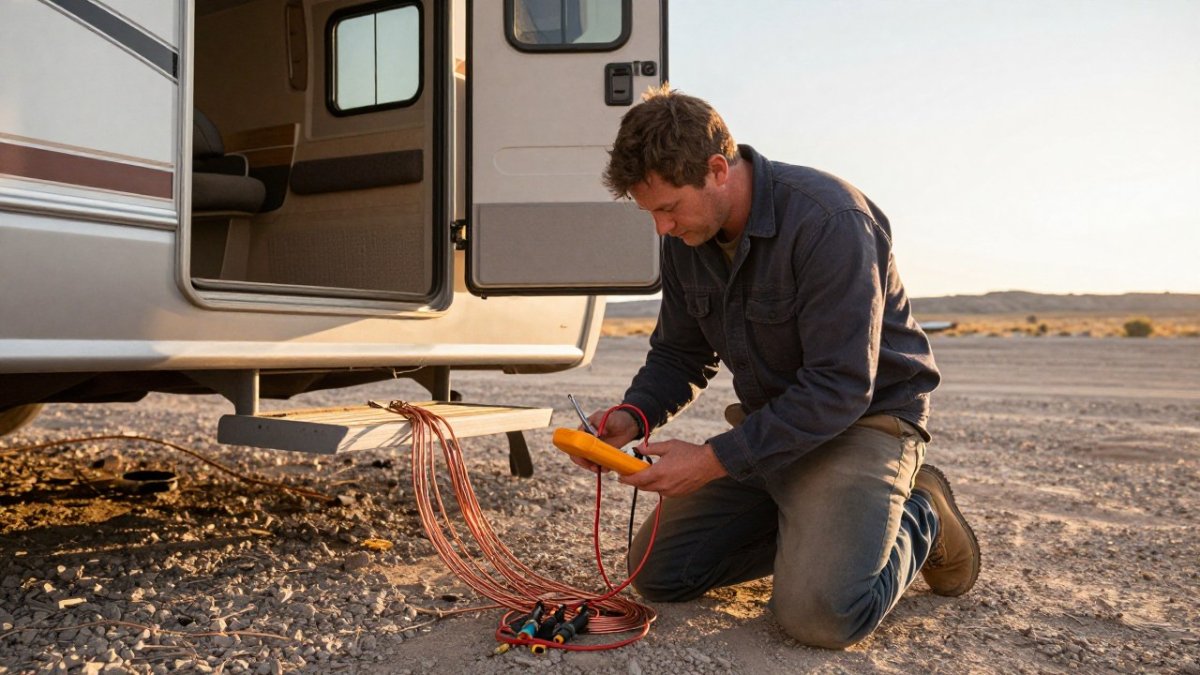
A diagnostic fee covers the time a technician spends finding the fault, not fixing it. It pays for testing, meter readings, system checks, and the judgment that turns a symptom into a repair plan.
Chasing an electrical gremlin or an intermittent HVAC fault can take an hour or more before anyone touches a replacement part, and the diagnostic charge compensates that work.
Ask before you book whether a diagnostic fee is credited toward the repair.
If you are weighing a mobile visit, our guide on booking a mobile RV diagnostic visit explains how to set one up without guesswork.
RV Repair Labor Time: Flat-Rate Guides, Book Time, and the Clock
Labor time is where most invoice disputes start. A flat-rate labor guide assigns a set number of hours to a specific repair, and the shop bills that figure whether the job takes longer or shorter. Book time is the same idea: a published estimate of how long a job should take on a given vehicle.
Actual time is what the clock says.
Why it matters to your total bill:
Ask which billing method applies to your job and get it in writing.
Long waits are a separate headache. Our article on ways to avoid long RV repair wait times covers scheduling tactics that keep your rig out of the queue.
Regional Rate Differences, After-Hours Charges, and Add-On Line Items
Labor rates can shift by region, by season, and by the time of the call. After-hours, weekend, and emergency calls often carry a premium, and mobile calls may add travel or mileage on top.
Get two or three local quotes on the same job rather than relying on a national average that may not reflect your market.
The IMR Automotive Research 2026 repair shop challenges report identifies parts and labor issues, economic uncertainty, customer behavior, and rising vehicle complexity as the four pressures shaping shop costs this year. Those pressures land in your invoice one way or another, which is why a published hourly rate rarely tells the whole story.
Add-on line items to watch:
Shop supplies and consumables: Often a percentage of labor or a flat fee per job. Ask how it is calculated.
Mileage or travel charges on mobile calls: Usually a per-mile rate plus a trip fee; confirm the radius before booking.
After-hours or emergency premiums: Frequently a multiplier on the standard rate or a flat call-out fee.
Minimum service charges: Often a one-hour minimum, which matters most on small jobs.
Check your invoice for sales tax and shop supplies, and make sure any quote you compare includes them.
To compare across regions and shop types, add the labor rate times estimated hours, the diagnostic fee (minus any credit), parts with markup, shop supplies, travel or after-hours premiums, and tax. That sum is the number to compare, not the hourly rate alone.
Watch out: a low hourly rate paired with minimums, a non-credited diagnostic fee, or supplies charges can cost more than a higher rate without those add-ons. Ask for the add-ons in writing before you authorize work.
If surprise charges are your worry, our guide on avoiding hidden RV repair fees lists the specific tactics that keep them off your bill.
Requesting a Written Quote from Basin RV
A written quote turns a conversation into something you can compare, question, and hold a shop to. Ask for the labor rate, the hours, the parts, and the fees in the same document before you authorize any repair.
Basin RV is a family-run business serving the Permian Basin for seven years. We offer up-front pricing, 24/7 emergency service, and mobile repair that comes to your RV. Our installations carry a 90-day workmanship warranty.
Before you commit to any quote, it helps to know what that warranty actually protects. Our article on what an RV workmanship warranty covers explains the scope in plain terms.
To request a quote, contact Basin RV through our website for current pricing and a written estimate.
Comparing RV repair shop hourly rates in 2026 comes down to one habit: read the quote, not just the total. Ask what the rate includes, how hours are billed, and which fees sit outside it. Basin RV answers those questions in writing before work begins, backs installations with a 90-day workmanship warranty, and offers mobile service so you skip the tow. Get started with Basin RV and get a written estimate you can actually check.
Frequently Asked Questions
What is the average labor rate for RV repair?
There is no single national RV labor rate. Labor pricing depends on the type of work and the shop. Ask each shop for its posted rate and what it includes before authorizing work.
Do RV repair shops charge diagnostic fees, and how much are they?
A diagnostic fee generally covers the technician time spent finding the fault. Ask Basin RV or any shop how its fee is handled and whether it is credited if you approve the repair. Ask upfront whether the fee is waived when you authorize repairs, and get the amount in writing before the technician starts. A clear diagnostic charge protects you from vague hourly billing later.
Is mobile RV repair more expensive than shop service?
Mobile service can avoid the cost of towing the RV to a shop. Ask for the total cost of any mobile visit, including any travel or mileage charges, so you can compare it with a shop visit. Ask for the travel fee, mileage charge, and hourly rate separately so you can compare the full number.
Should I pay an RV repair shop by the hour or by a flat-rate estimate?
Ask whether a quote is flat-rate or hourly, and get the RV repair labor time estimate in writing. Also confirm the billing increment and any minimum charge before work begins.
Comments