
How to Find a Mobile RV Mechanic for Oil Workers
Last Updated: November 26, 2026
Quick Summary
Oil workers can get a mobile RV mechanic on site by calling a shop that runs a mobile service truck, describing the rig and the fault, and confirming the site address, gate access, and a service window that fits the shift. The mechanic then travels to the rig with tools and common parts, diagnoses on the spot, and either fixes it in place or tells you what needs a shop bay.
Mobile service suits contained faults like appliances, electrical issues, and accessible plumbing leaks, while structural, tank, axle, and welding work needs a shop bay.
Confirm before you need it that the shop answers at night and ask about after-hours call-out policies and travel fees to remote locations.
Vet a mobile mechanic by checking licensing, insurance, a written estimate, a work warranty, and whether the technician can clear site gate access.
Have the rig's year, make, model, the symptom, your pad number, gate requirements, and your shift window ready before calling to book.
Log idle hours separately from miles, since extended idling for heat, air conditioning, or job-site power may shorten service intervals.
Need a mobile RV mechanic on your rotation?
Basin RV brings mobile repair, diagnostics, and 24/7 emergency help to your rig across the Permian Basin.
Table of Contents
How do oil workers get a mobile RV mechanic on site?
Oil workers can get a mobile RV mechanic on site by calling a shop that runs a mobile service truck, describing the rig and the fault, and confirming the site address, gate access, and a service window that fits the shift. The mechanic then travels to the rig with tools and common parts, diagnoses on the spot, and either fixes it in place or tells you what needs a shop bay.
That last part matters. Not every job belongs in a driveway or a man camp lot.
The hard part for oil workers is rarely the repair itself. It is the schedule. You are on a rotation, the rig sits at a camp or a pad, and the window between shifts is short.
Mobile vs. Shop Repair: Which Fits a Rotation Schedule
For most oil-field repairs, mobile service wins on convenience while the shop wins on capability, and the right choice depends on what broke. A rotation schedule leaves little room for hooking up and towing a rig across town, so mobile service removes a step you cannot afford. The trade-off is that a truck carries limited tools and parts.
Mobile service generally fits well when the fault is contained and reachable:
Appliances, water heaters, furnaces, and air conditioners
Electrical faults, converters, and battery issues
Plumbing leaks at accessible fittings
Belts, hoses, and routine fluid service
Diagnostics that need meters and a trained eye more than a lift
Shop repair is generally the better call when the rig cannot safely move or the job needs a bay:
Structural damage, delamination, or slide-out failures
Holding tank replacement
Axle, suspension, and brake work
Anything requiring welding or a lift
A common mistake is waiting until a small fault becomes a structural one. Water damage behind a fitting is cheap to fix in week one and expensive by week six.
The article sorts common faults by whether a mobile truck or a shop bay is the better fit.
Repair type | Best fit | Note |
Appliances, water heaters, furnaces, air conditioners | Mobile service | Fault is contained and reachable |
Electrical faults, converters, battery issues | Mobile service | Needs meters more than a lift |
Plumbing leaks at accessible fittings | Mobile service | Accessible fittings only |
Belts, hoses, routine fluid service | Mobile service | Truck carries limited tools and parts |
Structural damage, delamination, slide-out failures | Shop repair | Job needs a bay |
Holding tank replacement | Shop repair | Job needs a bay |
Axle, suspension, brake work | Shop repair | Job needs a bay |
Welding or lift work | Shop repair | Not a mobile job |
24-Hour Mobile RV Repair When a Breakdown Hits Between Shifts
A breakdown between shifts is a housing problem, not just a repair problem. If the furnace dies in January or the air conditioner quits in July, you cannot simply wait three days for an appointment.

Ask two questions when you call after hours. First, can a technician reach your site, gate, and pad without an escort? Second, what is the after-hours call-out policy, including any travel fee to a remote location?
One caveat: emergency service is for habitability and safety, not convenience. A failed furnace, a total loss of power, a water leak flooding the floor, or a fridge that will not hold temperature in extreme heat all qualify.
Mobile RV Appliance Repair at Camp and Man Camp
Mobile RV appliance repair generally covers the fridge, furnace, water heater, air conditioner, cooktop, and microwave, handled at the rig rather than in a bay. Many of these units are modular, which is why they often suit on-site work.
Appliance failures cluster around a few causes. Ignition problems on furnaces and water heaters usually trace to a dirty burner, a failed igniter, or low gas pressure.
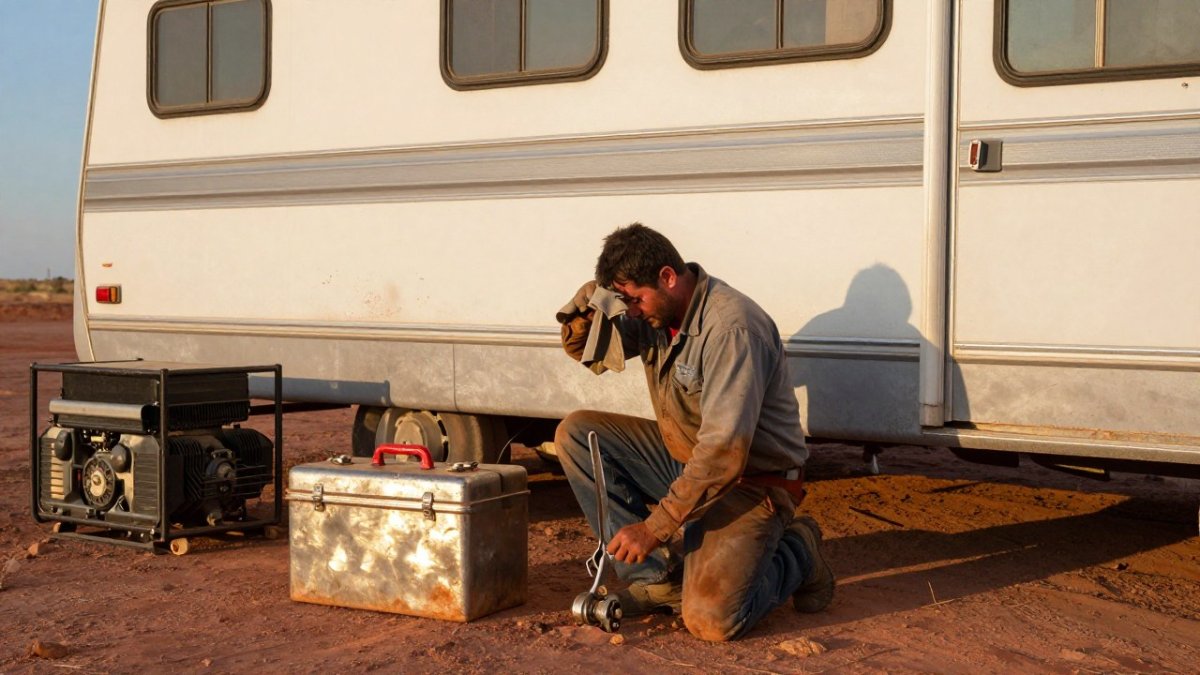
Camp environments can shorten appliance life. Dust, constant vibration from travel, and long run times in extreme heat can wear parts faster than occasional weekend use. If you live in the rig full time, scheduled appliance service is a sensible plan.
Mobile RV Electrical Diagnostics Before You Lose Power
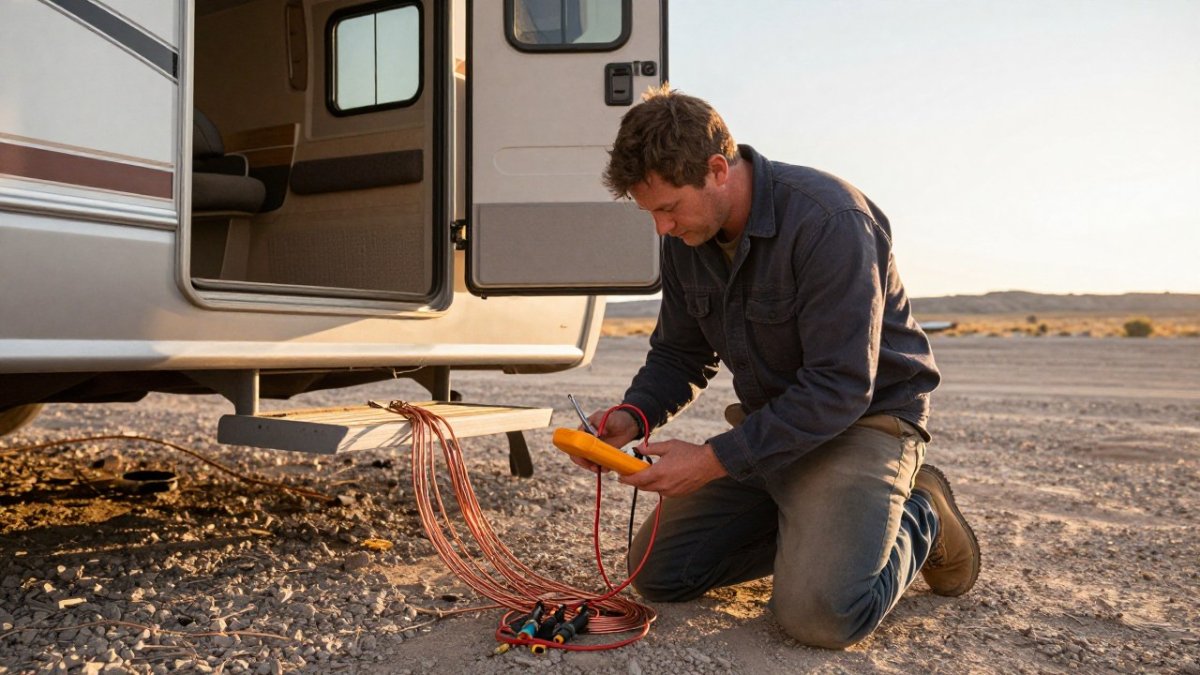
Mobile RV electrical diagnostics generally means testing the rig's power system on site, from shore power and the transfer switch through the converter, batteries, and 12-volt circuits, to find where power is being lost. Electrical faults are difficult to self-diagnose and can be made worse by guesswork, which makes professional diagnostics worth considering.
A technician should generally work through the system in order rather than swapping parts. Typical steps include:
Test the pedestal and shore cord for correct voltage and polarity
Check the transfer switch and breaker panel
Measure converter output and battery condition under load
Trace the affected 12-volt circuit for opens, grounds, or corrosion
Confirm the repair under load before packing up
Watch out: a rig with a loose neutral or reversed polarity at the pedestal can damage appliances and electronics across the whole coach. If breakers trip repeatedly or lights dim when a load kicks on, stop using shore power until someone tests it. For a fuller walkthrough of how on-site testing works, see our guide to RV electrical diagnostics on site.
RV Maintenance Between Shifts: A Checklist That Fits a Hitch
RV maintenance between shifts generally works best as a short, repeatable routine tied to your rotation rather than a long list you never reach.
Run this rotation checklist before you head out:
Wash or blow out the air conditioner filter and condenser coil, dust loading is the top cause of weak cooling at camp
Check the furnace and water heater burner areas for dust and insect nests, and test ignition
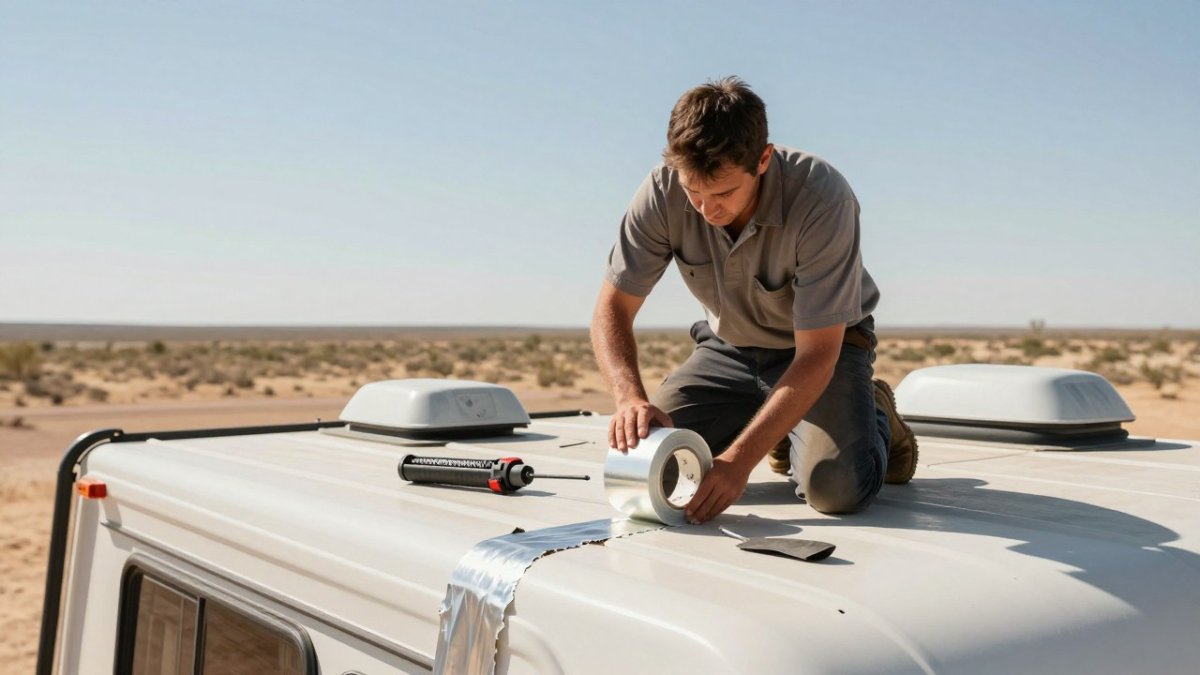
Walk the roof seams and around vents for cracked sealant, paying attention to sun- and dust-baked edges
Check tire pressure cold, including the spare, and look for sidewall cracks and uneven wear from repeated tows
Inspect belts and hoses for glazing, cracks, or soft spots
Test battery voltage and clean terminals; long idle periods and shallow charge cycles shorten battery life
Check the engine air filter and note dust buildup, a clogged filter costs fuel and power
Check under sinks and around the water heater for leaks
Confirm the fridge holds temperature overnight
Top off engine oil and coolant, and note any fluid loss
Test smoke and carbon monoxide alarms
Look at the hitch, chains, and breakaway cable before towing
Two oil-field habits matter more than any single item. First, log idle hours separately from miles. Second, do a dust-focused deep clean at the end of each long stay: condenser coils, furnace intakes, slide-out seals, and the roof.
Rotate the deeper items across the year. A radiator flush, a full tire rotation, a brake inspection, and a generator service do not need to happen every month, but they should land on a calendar rather than a memory.
How to Vet a Mobile Mechanic and Read the Repair Estimate
Vetting a mobile mechanic generally comes down to checking licensing and insurance, getting a written estimate before work starts, asking for a clear explanation of what the repair involves, and confirming any warranty on the work.
Run through this list on the first phone call:
Is the business licensed, insured, and bonded? Ask for the certificate of insurance and confirm the policy covers mobile work at your location.
Will you provide a written estimate with parts and labor separated?
Is there a travel fee or service call charge to my location, and how is it calculated, flat rate, per mile, or hourly from the shop?
What warranty covers the work, and what does it exclude?
Can you explain the diagnosis in plain terms before I approve the repair?
Do you carry the common parts for my appliance or system, or will the repair wait on an order?
What are your after-hours and weekend policies, and is there a separate call-out rate?
Can you provide a certificate of insurance and technician credentials for site gate clearance?
Site access is where oil-field jobs go wrong.
On the estimate itself, read for what is missing as much as what is listed. For a closer look at what a fair, itemized estimate contains, read our breakdown of transparent pricing for RV maintenance.
Watch out: a low hourly rate with an open-ended travel charge can cost more than a higher rate with a disclosed flat travel fee, so compare the total estimated cost, not the labor rate alone.
Booking Mobile Service for Your Rig
Booking mobile service is generally straightforward once you have the right information ready.
Have these ready before you dial:
Rig details: year, make, model, and whether it is a motorhome, fifth-wheel, or travel trailer
The symptom, in plain words, and when it happens
Your location, including pad number and any gate or escort requirement
The best window for a technician to arrive
Any parts you already suspect you need
If you want a clear, no-guesswork path from first call to a confirmed visit, our guide on how to book a mobile RV diagnostic visit walks through it step by step. For remote sites and camp access, the regional how-to on mobile RV repair in the Permian Basin covers what to expect.
A rig that fails on a rotation costs you more than a repair bill. It costs you sleep, a shift, and sometimes a place to stay. Basin RV runs mobile trucks and a shop across the Permian Basin, with 24/7 emergency support, up-front pricing before work begins, and a 90-day workmanship warranty on installations.
Frequently Asked Questions
Can a mobile RV mechanic service an RV at an oilfield worksite?
Often, yes, but it depends on site access rules. Many mobile RV mechanics will come to man camps, staging areas, and private pads if the gate allows a service truck and the rig is reachable. Before booking, tell the dispatcher your site name, gate hours, escort requirements, and whether a personal vehicle or service truck can get within hose and cord reach of the RV. Some sites restrict after-hours entry, so confirm access first and the visit goes faster.
What information should I give a mobile RV mechanic before booking?
Give the year, make, and model of the RV, the VIN if you have it, and a clear description of the symptom: what fails, when it fails, and any error codes or noises. Add your location type (campground, RV resort, storage lot, or worksite), gate and escort details, and the best window around your shift. Photos of the problem area and the shore power pedestal help the tech load the right parts. Accurate details reduce the chance of a second trip and a second service call fee.
How much do mobile RV techs charge per hour?
Rates vary by region, travel distance, and whether the job is emergency or scheduled, so ask for the hourly rate, the service call fee, and the travel fee separately before you approve work. Basin RV lists its pricing on its website and quotes up front so you can compare the total, not just the hourly number.
When should an RV go to a repair shop instead of being fixed on site?
On-site service suits diagnostics, appliance and electrical faults, fluid service, belts, hoses, batteries, and most tire work. Structural repairs, frame damage, major engine or diesel work, and jobs that need a lift or a paint booth usually belong in a shop. If a repair needs equipment that cannot travel, a shop visit is generally the way to handle it. Ask about that threshold when you book.
Comments