
.jpg)

Mobile RV Repair vs Dealership: Which Is Faster?
- basinrvserv3
- Jul 29
- 6 min read
A failed air conditioner in an Odessa campground, a water heater that quits before a trip, or a sewer valve leak at your site does not always leave you time to wait weeks for an appointment. When weighing mobile RV repair vs dealership, the right choice usually comes down to the problem, your location, and how quickly you need to be back up and running.
A dealership can be the right place for certain repairs, especially warranty work or major issues that require a manufacturer-specific process. But for many everyday RV problems, a mobile technician can save time, avoid the hassle of moving a disabled RV, and get the repair handled where the RV is parked.
Mobile RV Repair vs Dealership: The Main Difference
The basic difference is simple. A dealership asks you to bring the RV to its service department. Mobile RV repair brings a qualified technician to your home, campground, storage lot, jobsite, or roadside location when conditions allow.
That difference affects nearly every part of the service experience. If your RV will not move because of an electrical issue, tire problem, plumbing leak, or failed component, getting it to a dealership may mean arranging a tow, finding a driver, or taking time off work. A mobile service call removes that first obstacle.
Dealerships generally have a larger shop, more bays, and access to equipment that may be necessary for large structural repairs, extensive body work, major collision damage, or work requiring a lift. They may also have established relationships with specific manufacturers for warranty authorization.
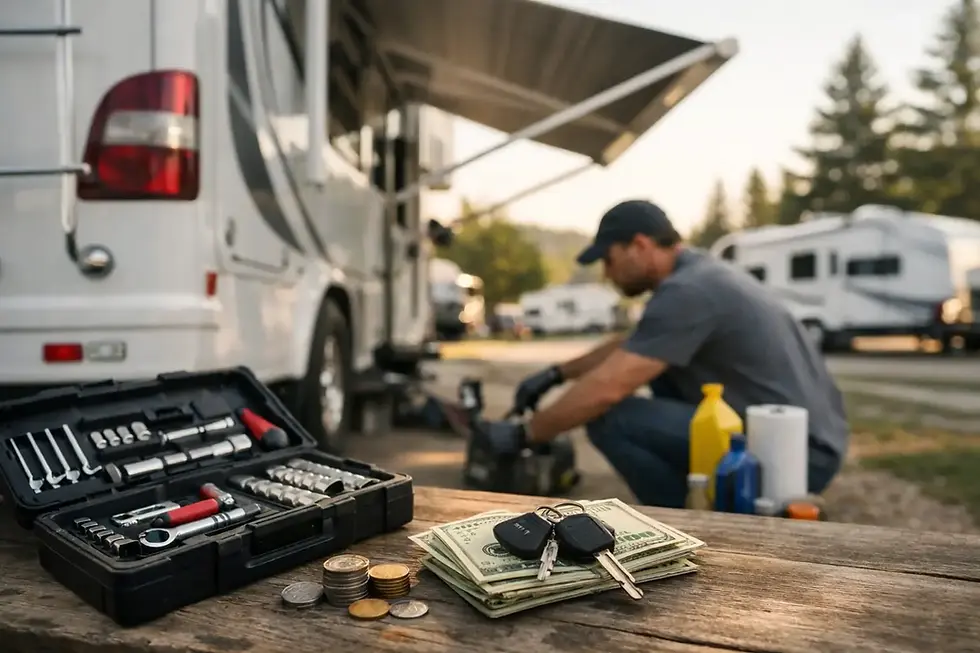
Mobile service is built for convenience and practical repair needs. It is often a strong fit for troubleshooting electrical systems, replacing water heaters, repairing plumbing, servicing air conditioners, diagnosing power converter problems, handling toilet and sewer repairs, and completing routine maintenance. The technician works at the RV, so you can see the issue, ask questions, and understand what is being repaired.
When Mobile RV Repair Makes More Sense
Mobile service is especially useful when moving the RV is difficult, inconvenient, or unsafe. A travel trailer with a dead battery system, a motorhome with an overheating concern, or an RV with an active water leak should not always be driven across town just to get inspected.
It also makes sense for owners whose RV is parked at home or stored outside town. Rather than hitching up a trailer or coordinating transportation, you schedule service at the location where the RV already sits. For full-time RVers and travelers, this can mean less disruption to work, travel plans, and daily living.
Response time is another major factor. Dealership service departments often manage a full schedule of sales prep, warranty work, inspections, and customer repairs. During busy travel seasons, an appointment may be days or weeks away. A mobile provider is often better positioned to address urgent service needs directly, particularly for common failures that can be diagnosed and repaired on-site.
Mobile repair is not just for emergencies. Preventive maintenance is easier when the technician comes to you. Seasonal inspections, roof and seal checks, battery and electrical testing, AC maintenance, plumbing checks, and replacement of worn hoses or filters can all help prevent a trip-ending problem later.
For West Texas RV owners, mobile service also avoids unnecessary travel in heat, wind, and long stretches of road. If the issue can be repaired safely where the unit is located, there is little reason to add towing or driving risk to the problem.
When a Dealership May Be the Better Choice
A fair comparison means recognizing that mobile repair has limits. Some jobs need a controlled shop environment, specialized equipment, multiple technicians, or access to large parts inventory. A dealership may be the better choice for serious frame damage, large-scale delamination, slide-out structural work, extensive roof replacement, collision repairs, or complex engine and drivetrain work.
Warranty coverage can also affect the decision. If your RV, appliance, or component is under manufacturer warranty, confirm the required process before authorizing repairs. Some manufacturers allow mobile technicians to perform approved warranty work. Others require preauthorization, specific documentation, or service through an authorized dealer.
Do not assume a dealership will automatically handle every warranty claim quickly, either. Approval, diagnosis, part availability, and shop workload can all affect the timeline. Ask who will contact the manufacturer, whether you must pay upfront, what documentation is needed, and how long the repair is expected to take.
If the repair requires an indoor bay or if the RV cannot be safely worked on where it is parked, moving it to a shop may be necessary. A dependable technician should tell you that directly rather than attempting a repair that is not safe or practical in the field.
Comparing Cost Without Guesswork
Price matters, but the lowest advertised number does not always equal the lowest total cost. Dealerships may have shop labor rates, diagnostic fees, storage charges, and delays that create added expenses. Mobile repair often includes a service-call or travel charge, particularly outside a normal service area or for emergency service.
The better question is: What will it cost to get the problem fully resolved?
If you must tow a non-running RV to a dealership, miss work to deliver it, and wait several days for a diagnosis, the total cost can rise quickly. A mobile technician may charge for travel but can eliminate towing and reduce downtime. For a straightforward repair at a home, campsite, or storage facility, that convenience can be worth far more than the trip charge.
Before scheduling any service, ask for clear information about the diagnostic charge, labor rate, travel fee, parts markup if applicable, and what happens if additional problems are found. Honest pricing communication matters because RV repairs can uncover issues that were not visible at first inspection.
A good service provider should explain the repair in plain language, tell you what is urgent and what can wait, and get approval before moving forward with non-routine work. That is how you avoid surprises, whether you use a mobile technician or a dealership.
Parts Availability Can Decide the Timeline
A dealership may carry parts for brands it sells, but that does not guarantee the part you need is in stock. RVs use components from many manufacturers, and even common items such as thermostats, control boards, water heater parts, converter components, sewer fittings, and electrical cords can vary by model and year.
Mobile technicians often carry frequently needed repair parts and can source additional items quickly. This is useful when the failure involves a core system that needs attention now, such as water, power, cooling, sanitation, or safety equipment. If a part must be ordered, a technician who understands the system can make sure the correct item is identified before you spend money and lose more time.
Owners who handle basic maintenance themselves also benefit from having access to the right replacement products. Keeping common supplies on hand, including drinking-water filters, sewer hoses, electrical adapters, fuses, and sealants, can turn a small problem into a short stop instead of an emergency call.
Questions to Ask Before You Choose
Whether you call a mobile technician or a dealership, start with a clear description of the symptom. Mention the RV year, make, model, appliance brand, error codes, whether the issue is constant or intermittent, and what you have already checked. Photos and short videos can help with plumbing leaks, damaged components, and display errors.
Then ask whether the repair can be completed on-site, how soon a technician can inspect it, what fees apply before repairs begin, and whether the needed part is available. If warranty coverage may apply, ask about authorization before work starts.
Also be honest about the RV's location. A technician needs adequate access, safe ground conditions, permission from the property owner or campground if needed, and a workable environment. Mobile repair is convenient, but safety comes first when dealing with electrical systems, propane, roof access, or major mechanical work.
Choose the Service That Gets You Moving Again
The best choice is not always mobile service or always a dealership. It is the service option that can safely fix the actual problem with a clear timeline and straightforward pricing. A dealership may be necessary for major shop-only work or a manufacturer-controlled warranty claim. For many repairs, maintenance jobs, and urgent service calls, mobile repair is the faster and more practical answer.
Basin RV is built around that practical need for fast, professional, reliable service in Odessa and the surrounding West Texas area. When your RV is stranded, parked, or simply overdue for maintenance, start by getting a clear diagnosis and a direct answer about what it will take to get back on the road.


Comments