
.jpg)
What Is Roadside Assistance Coverage?
- basinrvserv3
- May 30
- 6 min read
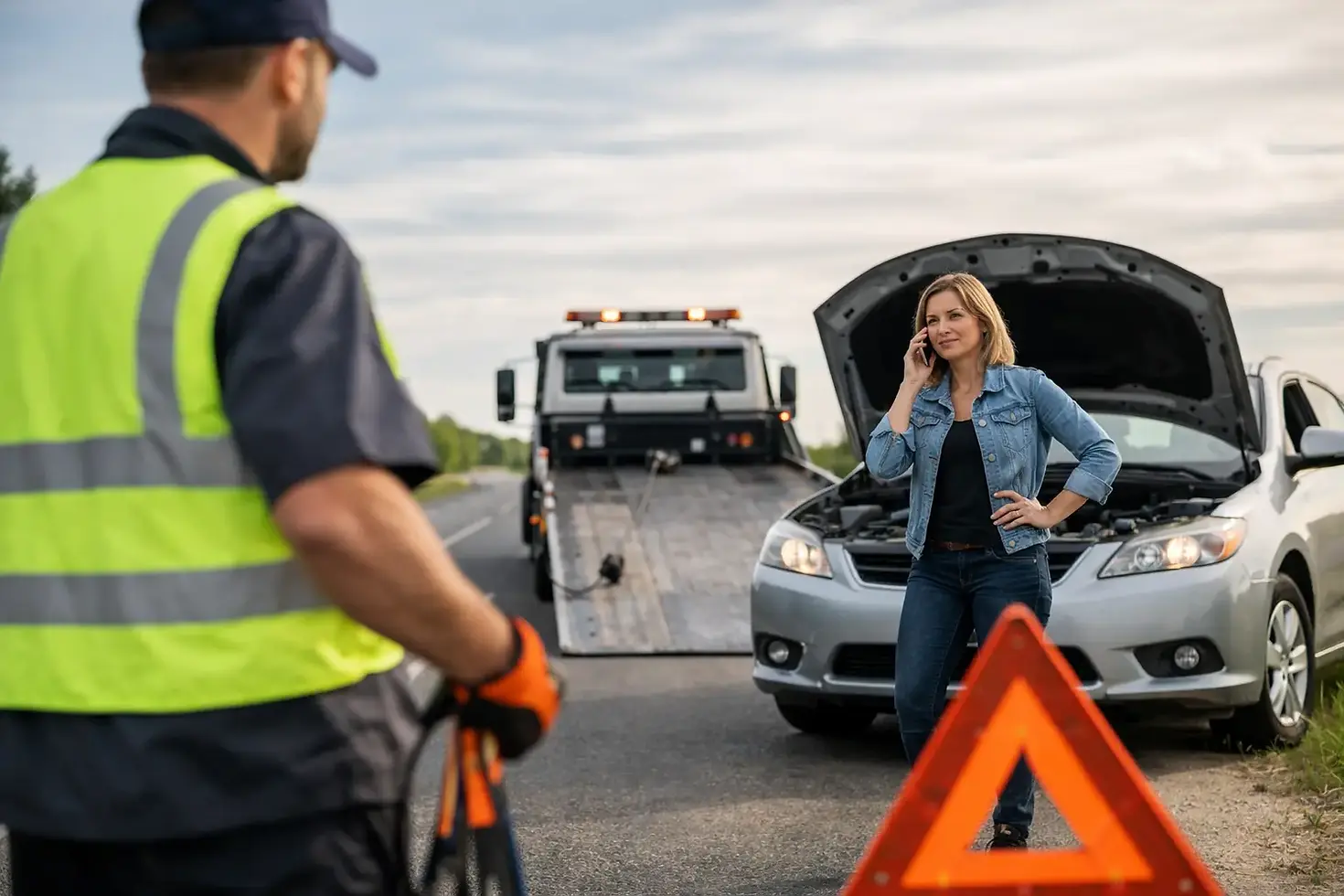
A dead battery at a fuel stop is frustrating. A blowout on an RV outside Odessa in summer heat is a different kind of problem. That is where people start asking, what is roadside assistance coverage, and what does it actually pay for when you need help now, not later.
The short answer is this: roadside assistance coverage is a service benefit that helps you get moving again after a breakdown or roadside problem. Depending on the plan, it may cover towing, flat tire service, jump-starts, lockout help, fuel delivery, winching, or mobile mechanic dispatch. But the details matter, especially for RV owners, because not every plan is built for large rigs, travel trailers, or motorhomes.
What Is Roadside Assistance Coverage for RV Owners?
For a standard passenger vehicle, roadside assistance is usually pretty basic. You call for help, and the provider sends someone out for common issues like a dead battery or flat tire. For RVs, the stakes are higher because the vehicle is larger, heavier, and more complex. A service call can involve towing equipment, dual rear wheels, trailer handling, or technicians who understand RV systems.
That means roadside assistance coverage for an RV should do more than promise help. It should clearly state that your type of RV is eligible and explain how service works if you are driving a motorhome, towing a fifth wheel, or pulling a travel trailer. Some plans include only the tow vehicle. Others include both the tow vehicle and the trailer. Some will help with mechanical breakdowns but not coach-related issues like slide-outs, air conditioners, or plumbing problems.
This is where many RV owners get caught off guard. They assume roadside coverage means any issue on the road gets handled. In reality, coverage usually applies to getting you to safety or to a repair location, not fixing every problem on the spot.
What roadside assistance coverage usually includes
Most roadside plans cover a core group of emergency services. The exact limits depend on the provider, but a typical plan includes towing to the nearest qualified repair facility, battery jump-start service, flat tire assistance, lockout service, fuel or fluid delivery, and winching if the vehicle is stuck in an accessible area.
For RV owners, towing is often the biggest issue. Not all towing benefits are equal. One plan may cover only a short distance. Another may promise towing to the nearest repair shop but leave you with limited choices if that shop does not handle RVs. A better RV-oriented plan may tow you to the nearest qualified RV repair facility, which is a more useful standard.
Flat tire service also sounds simple until you are dealing with a heavy unit, multiple axles, or a spare that is hard to access. Some providers will change a tire only if you have a usable spare. They do not cover the cost of a new tire. Fuel delivery works the same way. The service call may be included, but the fuel itself usually is not free.
Lockout help can save the day, but you should still check limits. If special equipment or damage-free entry methods are needed, there may be exclusions. Winching is another area where wording matters. Plans often cover a basic pull from a ditch, shoulder, or mud if the vehicle is close to a maintained road. More difficult recovery work usually falls outside standard coverage.
What roadside assistance usually does not cover
This is the part people skip until they are stuck.
Roadside assistance coverage generally does not pay for major repairs, replacement parts, tire purchases, battery replacement, hotel stays, or damage caused by an accident. It also may not cover problems related to poor maintenance. If your RV breaks down because of worn components, neglected tires, or a battery that has been failing for months, the roadside company may still dispatch help, but the actual repair cost is usually on you.
There are also service limitations that matter for RVs. Interior coach issues are often excluded from basic roadside plans. If your air conditioner stops cooling, your water heater quits, or your toilet leaks during a trip, that is usually not a standard roadside event. It is a mobile RV repair issue.
The same goes for parts availability. A roadside provider might help transport your RV or dispatch a technician, but they are not guaranteeing that the right replacement part is sitting on a truck nearby. When your problem involves converters, HVAC components, sewer hoses, or plumbing parts, getting back on the road may depend on having access to the right equipment fast.
Why RV roadside coverage is different from auto coverage
An RV is not just a larger car. It combines vehicle systems with living systems, and that changes what roadside support should look like.
If you have a motorhome, you need coverage that accounts for size, weight, and towing complexity. If you have a towable RV, you need to know whether the trailer itself is covered, whether tire service applies to the trailer, and whether the provider can separate the unit safely if needed. If you travel with pets, kids, or full-time living supplies, downtime becomes more than an inconvenience.
There is also a practical reality in West Texas and similar areas. Distances are longer, heat is harder on batteries and tires, and service availability can vary depending on where you break down. A cheap plan can look fine on paper but fall short when the nearest qualified RV help is a long way off.
How to read the fine print before you need help
If you are shopping for coverage, do not stop at the list of included services. Read the details that control how those services actually work.
Start with vehicle eligibility. Make sure your motorhome, fifth wheel, travel trailer, or camper is specifically covered. Then look at towing terms. You want to know if towing goes to the nearest facility, the nearest qualified facility, or a facility of your choice within a mileage cap. That difference can decide whether your RV ends up somewhere useful.
Next, check service limits. Ask how many service calls are allowed per year, whether there is a cap on winching, and whether there are exclusions for rough roads, private property, or remote areas. If you travel often, those details matter.
Also look at dispatch expectations. Some plans reimburse you after the fact, while others coordinate the service directly. Reimbursement sounds flexible, but it can become a headache if you are paying a large RV tow bill up front.
Finally, ask what is not covered. That answer is often more valuable than the sales pitch.
When roadside assistance is enough, and when you need mobile RV repair
Roadside assistance is useful when the goal is immediate stabilization. You need a jump-start, a tire change, a tow, or help getting off the shoulder safely. It is an emergency support tool.
Mobile RV repair is different. That is the better fit when the issue involves coach systems, parts replacement, diagnostics, or repairs that can be handled on-site without towing the unit. Problems with air conditioners, water heaters, electrical systems, plumbing, toilets, sewer connections, or power converters often fall into this category.
Sometimes you need both. A roadside provider may help you get out of immediate danger, and then a mobile RV technician handles the actual repair. That combination can save time, reduce stress, and avoid unnecessary towing.
For RV owners in West Texas, that matters. If a problem can be repaired where the RV is parked, you may avoid a long tow, dealership delays, and added disruption. That is one reason many owners prefer working with a local service provider that understands RV systems and can source common replacement parts without a lot of back-and-forth.
Is roadside assistance coverage worth it?
For most RV owners, yes, but only if the coverage matches the rig and the way you travel.
If you stay close to home, drive short distances, and keep your RV well maintained, you may use it rarely. Even then, one tow can justify the annual cost. If you travel long distances, camp in remote areas, or use your RV regularly, the value goes up fast.
Still, not every plan is worth buying. A low-price policy that excludes your trailer, limits towing too tightly, or sends you to a general repair shop that does not work on RVs can create more hassle than help. The best coverage is the one that is clear, realistic, and built around your actual setup.
If you are comparing plans, think beyond the ad copy. Ask how the provider handles large RVs. Ask what happens after hours. Ask how they define a qualified repair facility. Ask what you would pay out of pocket in a worst-case situation.
That is the real test.
A practical way to think about roadside assistance coverage
Roadside assistance coverage is not a full repair warranty, and it is not a substitute for maintenance. It is a way to get help fast when your RV cannot safely continue. That can be a major advantage when you are stranded on the side of the road, dealing with a tire issue at camp, or trying to avoid turning a small problem into a ruined trip.
If you own an RV, the smartest move is to pair good coverage with a reliable plan for actual repairs. That might mean knowing who to call for mobile service, keeping key parts on hand, and understanding which problems are roadside emergencies versus repair issues. Basin RV works with RV owners who need that kind of practical support - fast response, honest communication, and real help when something quits working.
Before your next trip, take ten minutes and review your coverage. It is a lot easier to fix the fine print in your driveway than on the shoulder of the highway.


Comments